Water damage repair: rebuilding what the water ruined
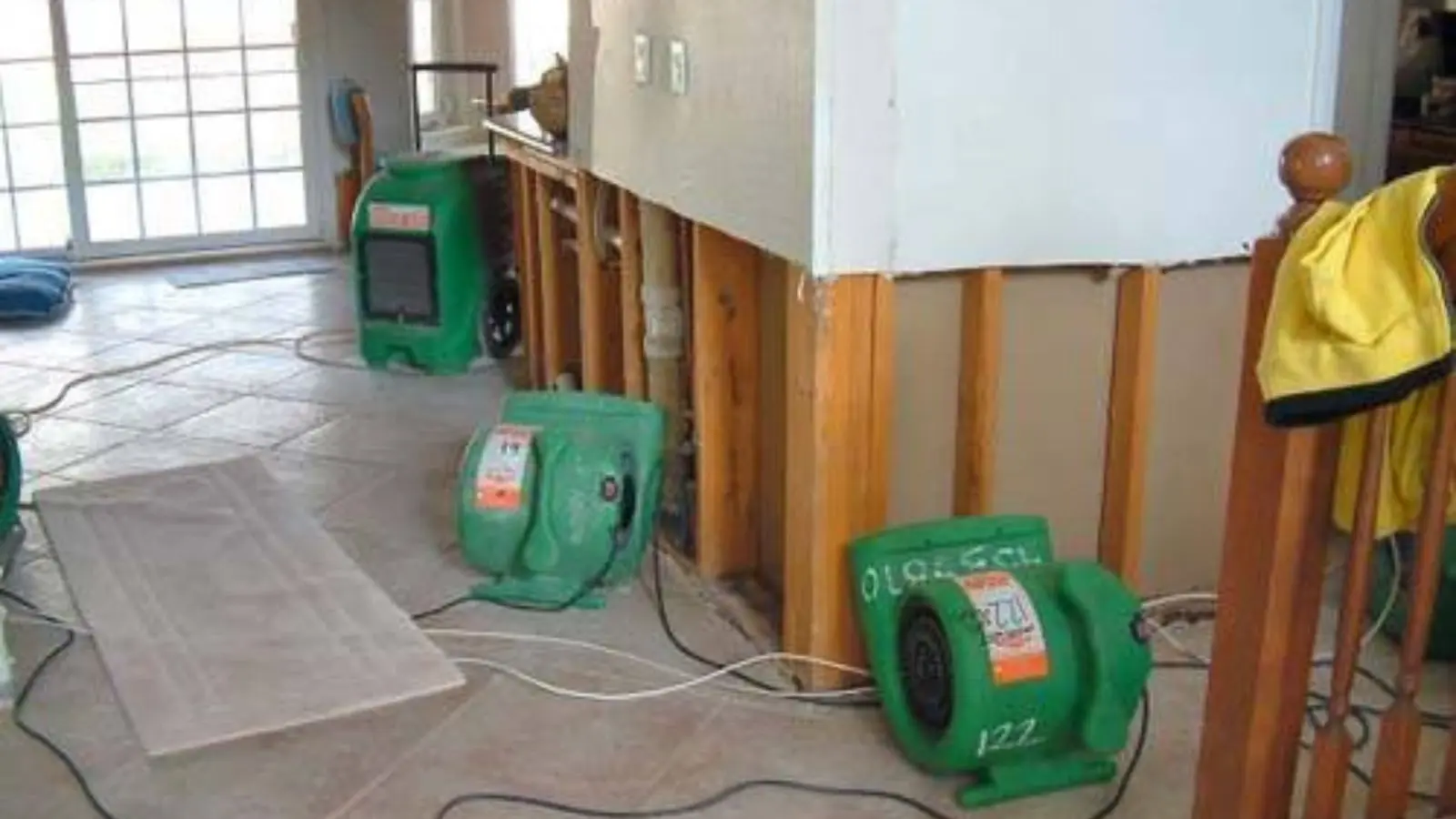
Water damage repair in Santa Fe Springs is the rebuild phase of a water loss. It starts after extraction and drying are finished and moisture readings match a dry reference, and it covers drywall, insulation, trim, flooring, paint and cabinetry.
The order matters more than the finish. A new sheet of drywall screwed over a damp stud can grow mold behind fresh paint, so a good repair scope begins with a written dry check and only then lists the materials to cut out and replace.
Ceiling and wall water damage repair
A ceiling tells you how bad the leak was. A tan ring that is dry to the touch is a stain, and it can often be sealed and repainted once the source is fixed. A ceiling that bows or feels soft is saturated, and wet drywall loses strength fast. A ceiling that has dropped in pieces is a collapse, which means insulation and debris are now on the floor and the framing above is exposed.
Repair usually means cutting out the wet drywall past the visible edge, often along a straight line to the nearest joist so the patch has something to fasten to. Wet insulation is pulled and replaced, because compressed, soaked batts do not dry well and stop insulating. Studs and joists are metered before anything new goes up.
The source has to be fixed first. A roof leak, an upstairs supply line or drain, or an AC condensate line that backed up above the ceiling will simply wet the new drywall too. Once the patch is hung, taped and sanded, texture is matched to the surrounding surface and the whole wall or ceiling plane is primed and painted so the patch does not show in side light.
Water still spreading? The dispatch line is open 24 hours a day.
☎ Call (562) 271-5850
Why leaks cause repairs in Santa Fe Springs buildings
Santa Fe Springs mixes older residential blocks with a large industrial base, so repair jobs range from hallway drywall in a house to office finishes in a commercial unit. The Clarke Estate was built in 1919 and finished in 1921, a reminder that buildings in the city span more than a century. In older construction, ask for moisture readings behind walls before a patch goes up, because old piping and layered finishes hide wet spots.
Slab-on-grade and raised-foundation homes are both common in Southern California, and they fail differently. Slab homes tend to show water at the baseboard and flooring edge, while raised foundations can leave wet subfloor and insulation below the floor that you cannot see from the room.
Signs the room is ready for repair
Repair should not start on a guess. Before anyone orders drywall, look for these markers that the drying phase is truly finished.
- ✓Moisture meter readings on studs, plates and subfloor match a dry reference material
- ✓The source of the leak has been repaired and tested under pressure or flow
- ✓No musty smell remains when the room has been closed for a few hours
- ✓Wet insulation, pad and soft materials have been removed and bagged
- ✓Mold has been ruled out or handled before closing up the wall
If any of these are missing, the repair scope should wait. A day of extra drying costs far less than opening a finished wall a second time.
Hardwood floor cupping and when to sand
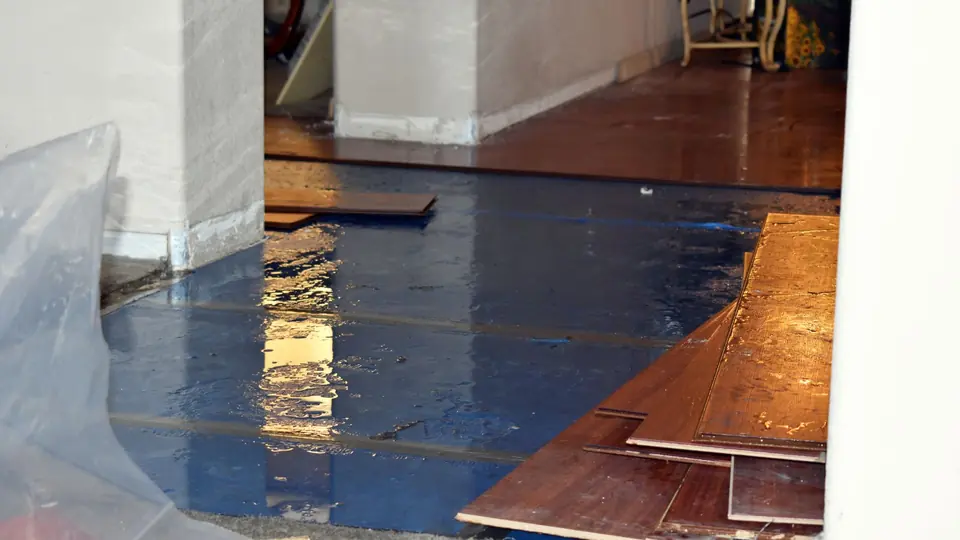
Cupping is when the edges of a board rise higher than the center, so the floor looks like a row of shallow trays. It happens because the bottom of the board took on moisture faster than the top, usually from a leak, a slab that stays damp or a washer or dishwasher line that ran for days.
Do not sand a cupped floor early. Sanding flattens boards that are still swollen, and once they dry and shrink the gaps and crowns come back worse. Drying equipment is run, and moisture readings are taken in the boards and the subfloor until they stop dropping. Many floors relax on their own once they are truly dry.
Boards must be replaced when they are crushed, split, delaminated, black with mold, or still cupped after reaching dry readings. Engineered flooring with a swollen core is usually replaced rather than sanded because the wear layer is thin.
Repair or replace: a decision table
Most homeowners want to know what can stay. This table gives the general rule, and the final call comes from moisture readings and a look at the material.
| Material | Repair when | Replace when |
|---|---|---|
| Drywall | Stained but firm, dried quickly, no mold, small area | Soft, bowed, crumbling at the edges or wet for days |
| Insulation | Rarely worth saving once soaked | Wet, compressed or stained from a ceiling leak |
| Hardwood floor | Mild cupping that flattens as it dries | Crushed, split, moldy or still cupped at dry readings |
| Laminate and vinyl plank | Surface wet briefly and sealed edges stayed tight | Edges swollen or planks lifting |
| Baseboards and trim | Solid wood that dries and can be repainted | Finger-jointed or MDF trim that swells |
| Cabinets | Solid boxes with minor toe-kick wetting | Particleboard that swells or delaminates |
Materials that stayed wet for more than 24 to 48 hours are more likely to need replacement.
What repair does not do, plus permits and licensing
Restoration is not waterproofing. Repair puts back what was damaged, but it does not make a room immune to the next leak. If water entered because of a failed roof, a bad grade or a leaking shower pan, that cause needs its own fix.
Repairs that alter a building may need a permit. The Santa Fe Springs Building and Safety Division at 11710 E. Telegraph Road states that appropriate permits must be obtained prior to the start of any project, including alterations and repairs. The statement does not say which specific repairs need one, so ask the division before work begins.
In California, anyone who contracts for or bids on a construction project of 500 dollars or more in combined labor and materials must be licensed, according to the Contractors State License Board. You can check a license at cslb.ca.gov, and the board advises a written contract and a down payment of no more than 10 percent or 1,000 dollars, whichever is less.
What shapes the price of a repair
Repair prices vary because every loss is different. A fair scope explains each of these factors in plain terms before the first cut.
- ✓Square footage of drywall, flooring or ceiling that has to be replaced
- ✓Materials involved, such as hardwood, tile, cabinets or textured ceilings
- ✓How much demolition and disposal came first
- ✓Whether drying is complete or more equipment days are needed
- ✓Matching work, including texture, paint and trim profiles
Sudden and accidental water damage is often covered by insurance, gradual leaks and neglect often are not, and flood damage is usually excluded. Check your policy or ask your insurer. Want your real number? Call and describe the loss, and the scope and price are explained before work starts.
Licensed, insured and close by
Crews working on your property are licensed and insured, and the scope and price are explained before work starts. Repairs are available across Santa Fe Springs and the neighboring towns of Whittier, Norwalk, Downey, La Mirada and Pico Rivera.
If your loss is just across the line, the same crew handles water damage repair in Downey and nearby addresses. Not sure whether the wall is dry? Start with water mitigation, then come back to repair, and if you find fuzzy growth when a panel comes off, see mold remediation.
Frequently asked questions
Sometimes. If the stain is dry, the drywall is firm and the leak has been fixed, the area can be sealed with a stain-blocking primer, textured to match and painted. If the ceiling is bowed, soft or has a damp patch that returns, it needs to be opened so the wet drywall and insulation can be inspected and replaced.
The price comes from the materials, the area, the demolition and disposal needed, and the finish work to match what is around it. After an on-site look, the scope and price are explained before work starts, so you know what you are approving.
Repairs start once moisture readings in the framing and subfloor match a dry reference. That can be a few days after extraction for a small clean-water loss or longer for a larger one. Building over materials that are still damp is the main way mold ends up inside a finished wall.
Often a mildly cupped floor relaxes as it dries, which is why sanding waits until the boards and subfloor stop losing moisture. Floors that are crushed, split or moldy, and engineered floors with a swollen core, usually need replacement.
It depends on the work. The city's Building and Safety Division states that appropriate permits must be obtained prior to the start of any project, including alterations and repairs, but it does not list which repairs qualify. Call the division before you start.
No. Repair replaces damaged materials and finishes. It does not stop water from coming in again. If the cause was a roof, a drain or a grade problem, that cause has to be fixed separately.