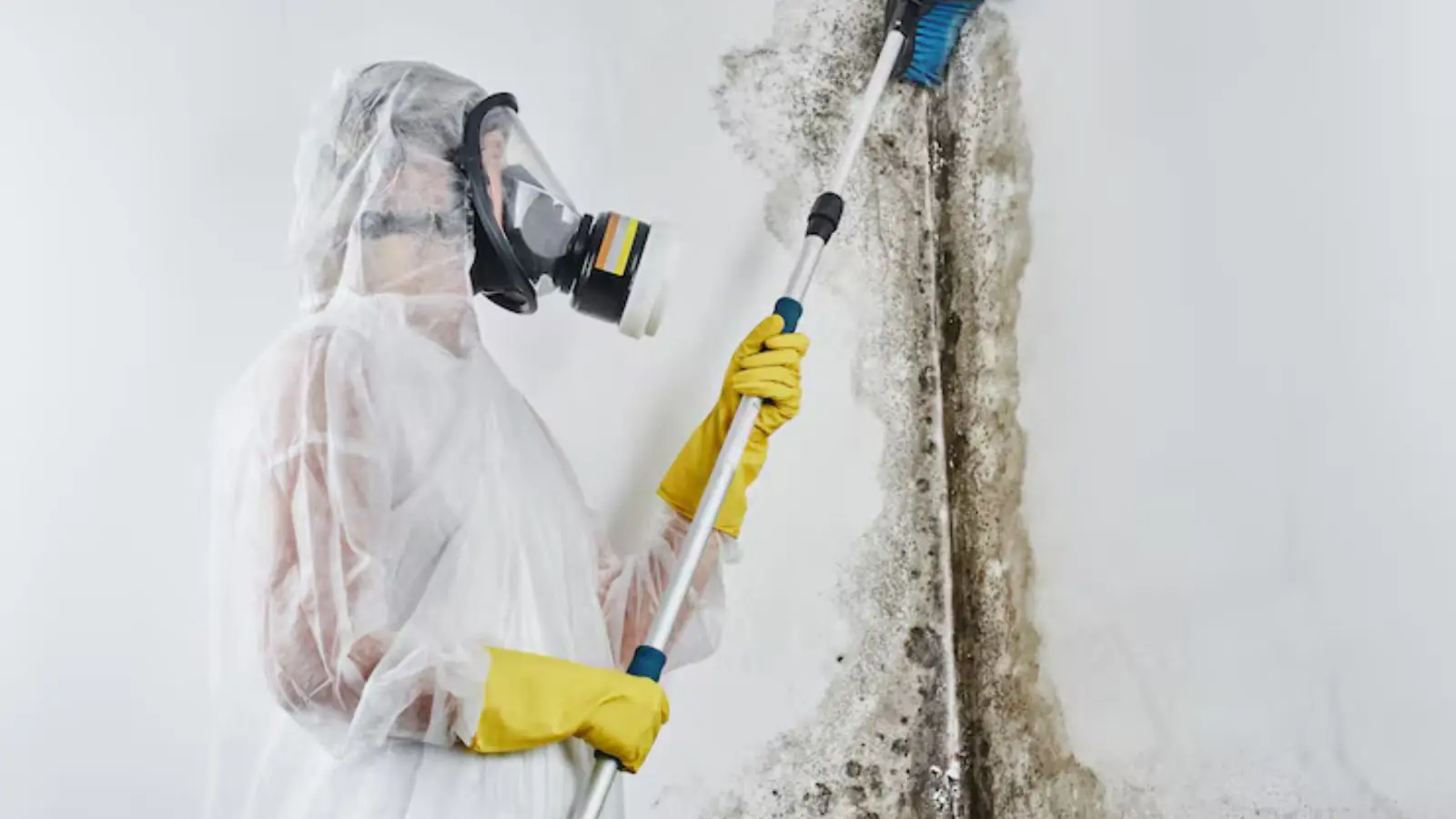
Mold remediation after a leak, step by step
Mold remediation is the controlled removal of mold-damaged materials and the cleaning of surfaces, done under containment and followed by a check that the area is clean. It follows a published industry standard, ANSI/IICRC S520, which a homeowner can ask any company about.
Mold needs moisture, as the U.S. EPA says, and none of the many types of mold will grow without water or moisture. That is why remediation always starts with the water.
There is a musty smell and dark spots near a closet: what is remediation?
A musty smell in a closet and dark spots along the baseboard usually mean a wall or floor stayed damp for a while, often after a leak. The trade term for fixing that is mold remediation, which means isolating the area, removing what is affected, cleaning the rest and verifying the result.
It is different from wiping a stain with a household cleaner. Remediation is about finding where the moisture is, taking out porous materials that cannot be cleaned, and keeping spores from spreading to clean rooms while the work is done.
Water still spreading? The dispatch line is open 24 hours a day.
☎ Call (562) 271-5850Mold after water damage
Mold after water damage is the most common reason people call. A washer valve lets go, an AC condensate line backs up above a ceiling, a roof or siding leak soaks a wall, or a toilet or sink supply line weeps under a cabinet for weeks. The EPA advises drying water-damaged areas and items within 24 to 48 hours, and mold shows up most often when that window is missed.
The moisture must be fixed first, because the EPA states that if you clean up the mold but do not fix the water problem, most likely the mold problem will come back. That means repairing the leak and drying the structure. See water mitigation for how drying is monitored and water damage repair for the rebuild once the area is clear.
Remediation does not replace those steps. It works alongside them, and a good scope lists the water fix, the mold work and the rebuild in order.
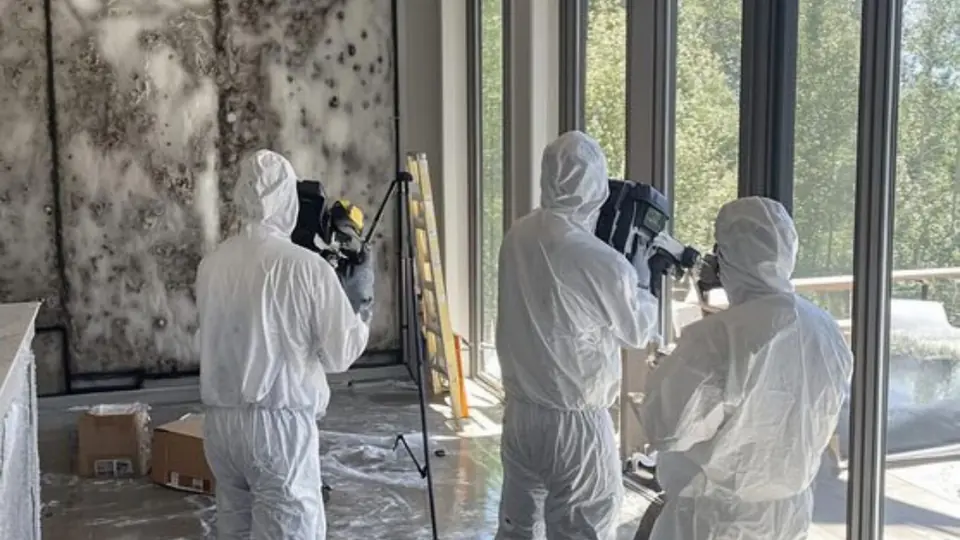
Where mold hides in local homes and buildings
Santa Fe Springs has older residential streets beside a large industrial base, and slab-on-grade and raised-foundation homes are both common in Southern California. Water in a slab home often hides behind baseboards and under flooring, while raised foundations can hide wet subfloor and insulation under the house. Basements are uncommon locally, so do not assume the problem is below grade.
These are the places that show up again and again.
- ✓Closet after a leak. A wall shared with a bathroom or laundry that stayed damp behind stored boxes.
- ✓Bathroom ceiling corner. Poor ventilation or a leak from above leaves dark growth at the corner.
- ✓Under a sink. A slow supply or drain leak soaks the cabinet floor and the wall behind it.
- ✓AC condensate line. A clogged line backs up into a drip pan or ceiling and keeps insulation damp.
- ✓Roof or siding leak. Water tracks down into the wall cavity and shows up far from the entry point.
Mold removal and black mold cleanup
People search for black mold cleanup because it sounds worse, but color does not tell you what the mold is or how serious the job is. Dark growth, green growth and white fuzz are all handled by the same method: find the moisture, contain the area, remove affected porous materials and clean what can be cleaned.
The process runs in a set order. Poly sheeting and zipper doors seal the work zone. A negative air machine with a HEPA filter pulls air out of the zone so spores do not drift into clean rooms. Moldy drywall, insulation, carpet and pad are cut out, bagged and removed. The EPA notes that absorbent or porous materials, such as ceiling tiles and carpet, may have to be thrown away if they become moldy.
Hard surfaces like framing and concrete are HEPA vacuumed, scrubbed with detergent and water, and dried completely. Surfaces are vacuumed again once dry, and air scrubbers run until the area is clean. Questions about how mold affects anyone's health belong with a physician.
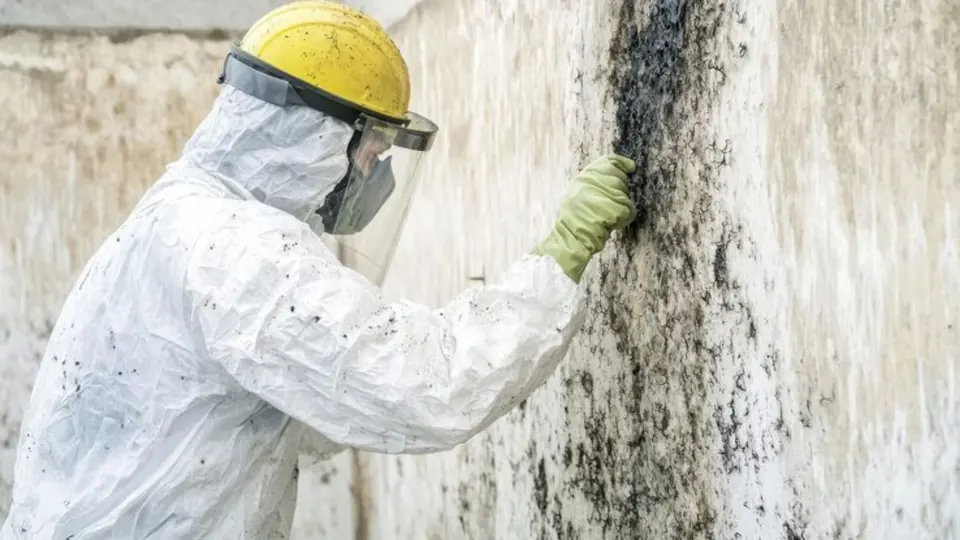
Small surface mold versus larger or hidden mold
Size and location decide who should do the work. The EPA says that if mold growth covers more than 10 square feet, or there has been a lot of water damage, consult its guide and consider professional help. If the water was sewage or other contaminated water, the EPA says to call in a professional.
| Situation | Who usually handles it | What is done |
|---|---|---|
| Small spot on a hard surface, under 10 square feet, cause fixed | Homeowner, following EPA cleanup guidance | Scrub with detergent and water, dry completely, fix the moisture |
| Growth on drywall or ceiling tile | Professional in most cases | Contain, cut out affected porous material, bag and remove |
| More than 10 square feet or repeated leaks | Professional | Containment, negative air, HEPA vacuuming, removal, drying and clearance |
| Hidden growth inside a wall or under flooring | Professional with an inspection | Moisture mapping, open the cavity, remove and dry |
| Sewage or contaminated water involved | Professional | Treat as a safety job and set containment first |
If you have health concerns, the EPA advises consulting a health professional before starting any cleanup.
Mold testing, inspection and clearance
An inspection starts with a visual check and moisture readings, using a moisture meter and a thermal imaging camera to find damp areas that are not visible. Air or surface sampling can be added, but sampling alone does not tell you what to do. A written scope based on where the moisture is and which materials are affected does.
After the work, clearance means the area is checked to confirm it is clean and dry. Independent clearance testing is done by a third party that is not the remediation company, which avoids a conflict of interest. Ask for the report in writing.
Mold clearance for a home sale or loan comes up often, since some buyers' lenders may want mold addressed before they fund. We make no promises about what a lender will accept, so ask the lender what documentation it needs and give your inspector the clearance report.
Asking about licensing
Ask whether the contractor is properly licensed, and check any license number at cslb.ca.gov. In California, anyone who contracts for or bids on a construction project of 500 dollars or more in combined labor and materials must be licensed, according to the Contractors State License Board. Get a written contract, with any changes in writing.
Repairs that alter a building may need a permit. The Santa Fe Springs Building and Safety Division states that appropriate permits must be obtained before the start of any project, so ask the division about the rebuild after remediation.
What shapes the cost of mold work
- ✓Size of the affected area and the number of rooms
- ✓Whether growth is on surface material or inside walls
- ✓Porous material that has to be removed and hauled
- ✓Containment, negative air and air scrubber days
- ✓Drying time and rebuild scope afterward
Insurance often covers sudden and accidental water damage and often excludes gradual leaks and neglect. Check your policy or ask your insurer. Want your real number? Call and describe the loss, and the scope and price are explained before work starts.
Serving Santa Fe Springs and nearby cities
Crews are licensed and insured and respond across Santa Fe Springs and the neighboring cities of Whittier, Norwalk, Downey, La Mirada and Pico Rivera, with an emergency line answered 24/7. If the leak that caused the mold left standing water or a wet floor, start with water damage cleanup before the mold work. A loss near the Whittier line is also covered, see Whittier water damage.
Frequently asked questions
A musty smell usually points to a damp wall or floor. Look for a recent leak, check behind stored items and have the area metered, since growth can be inside the wall. Fix the water source and dry the area, and call if the smell stays or dark spots appear.
The EPA says small areas on hard surfaces can be scrubbed with detergent and water and dried completely. If growth covers more than 10 square feet, water damage is large, or the water was sewage, it advises professional help. If you have health concerns, ask a physician before cleaning.
It can if the water source is not fixed. The EPA says that if you clean up mold but do not fix the water problem, the mold problem will most likely come back. Fix the leak, dry the structure and keep humidity under control.
Clearance testing confirms the work area is clean after remediation. It is best done by an independent third party, not the company that did the work. Ask for a written report.
That is up to the lender. Some buyers' lenders want mold addressed before they fund, so ask the lender what documentation it requires. We cannot promise what any lender will accept.
The price depends on the size of the area, the materials removed, containment and air scrubber days, drying time and rebuild scope. After an on-site look, the scope and price are explained before work starts.