The short answer
The cost of repairing a water damaged ceiling depends on how much of the ceiling is wet, what kind of water got in, what the ceiling is made of, and how much rebuilding is left after drying. A number quoted from a photo is a guess, because a stain the size of a dinner plate can sit under a soaked insulation bay.
This page lists the factors so you can read a quote with confidence. It gives no dollar figures on purpose. Every ceiling job is priced from the actual loss.
Cost factors and what each one changes
| Cost factor | What changes in the scope |
|---|---|
| Water category | Clean supply water may allow drying in place. Gray or sewage water means removal and disposal of porous materials. |
| Size of the wet area | More square footage means more demolition, more drying equipment and more material to replace. |
| Ceiling material | Flat drywall, textured drywall, plaster and acoustic tile each dry, patch and finish differently. |
| What sits above | Insulation, ductwork, a second floor or a roof structure can add wet layers to dry or replace. |
| Drying days | Air movers and LGR dehumidifiers are billed by the days they run, so a slow-drying cavity costs more. |
| Access | A ceiling over stairs, a vaulted room or a tall entry needs scaffolding or special setup. |
| Rebuild and finish | Patching, taping, texture matching, priming and paint are separate steps and often separate trades. |
| Permits | Some repairs need a permit and an inspection, which adds time and cost to the schedule. |
Each row is a variable, not a price. The real scope comes from moisture readings taken on site.
Water still spreading? The dispatch line is open 24 hours a day.
☎ Call (562) 271-5850Safety steps for a wet or sagging ceiling
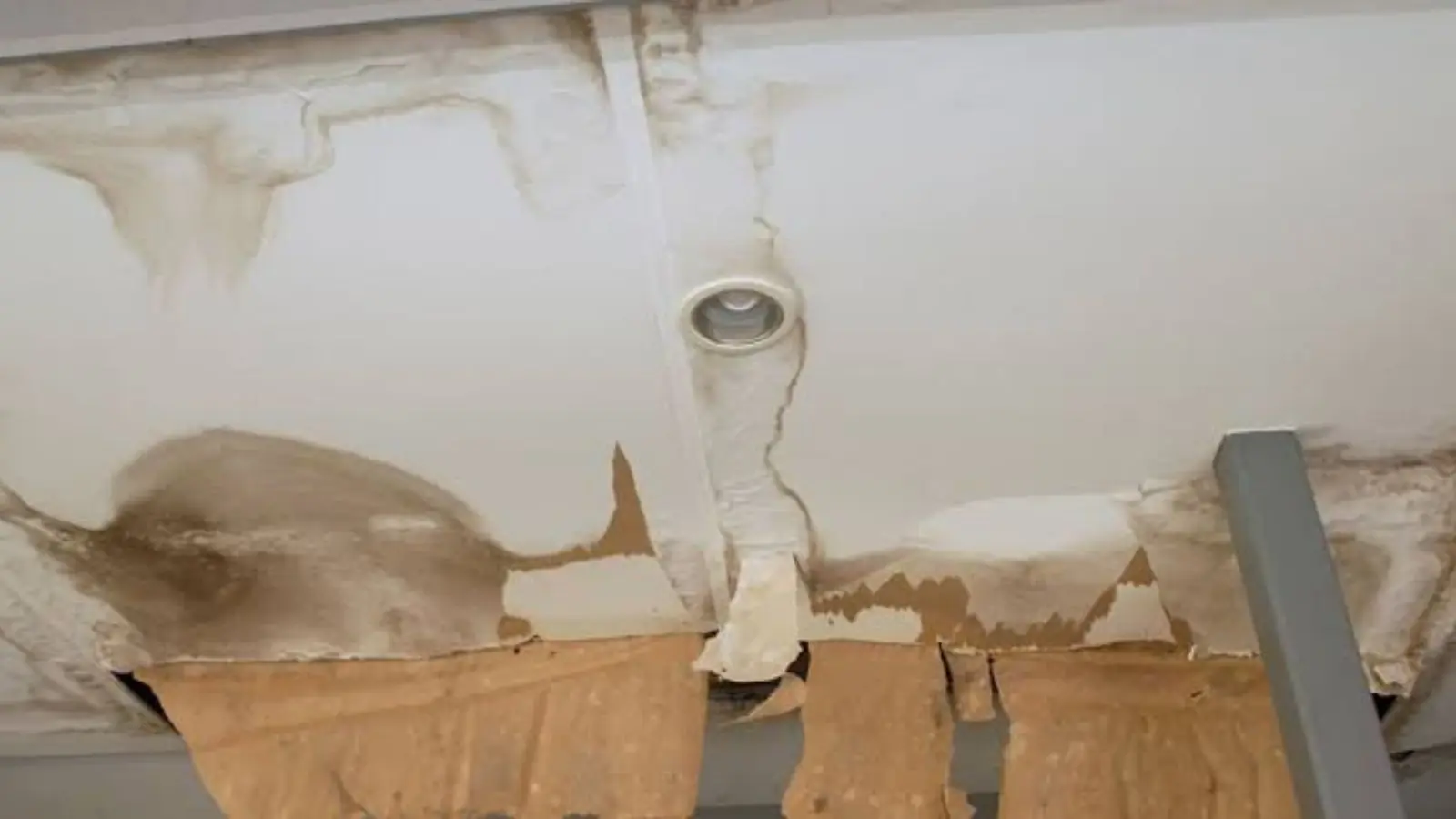
A ceiling holding water can fail without warning. Stay out from under a bulging area, and do not poke it unless you are ready to catch the water with a bucket and tarp. Do not use a light fixture or fan that has been wet until it is checked.
Turn off power to that room if the panel is dry and reachable. Document the stain with photos before any drywall is removed, because the damage record affects both repair scope and any claim.
Why the water category matters most
ANSI/IICRC S500 defines three water categories. Category 1 is clean, such as a split supply line. Category 2 is significantly contaminated, such as a washer overflow. Category 3 is grossly contaminated, such as sewage from a floor drain or a toilet backup that soaked through a floor above.
A ceiling that took Category 1 water for a short time can sometimes be dried and kept. The same ceiling soaked by Category 3 water is removed, bagged and replaced, along with the insulation behind it. That single difference can change the scope more than any other factor on the list.
Ceiling material and texture
Drywall soaks up water fast and loses strength when wet. Once it sags, stains through or turns soft to the touch, it usually has to come down. A collapsed ceiling is the clearest case, since wet paper and gypsum rarely hold their shape again.
Plaster behaves differently. It can survive wetting if it stays bonded to the lath, but it is slower to dry and harder to patch. Popcorn and knockdown textures add cost at the finish stage because matching them to the rest of the room takes a skilled hand and a few test patches.
Safety before any estimate
Stay out from under a sagging or bulging ceiling. Wet drywall is heavy and can drop without warning, and water pooled above a light fixture can reach wiring. If water is touching outlets, fixtures or the electrical panel, cut power only if the panel can be reached dry, and call the utility or 911 for any electrical or gas risk before calling the restoration line.
If the water came from a sewer line or a toilet, keep people and pets out of the room until it has been dealt with.
Drying days are a real cost
Before anyone repairs a ceiling, the structure has to be dry. Technicians read moisture meters across the drywall and framing, scan with a thermal imaging camera for hidden wet spots, and then set air movers and LGR dehumidifiers. Small access holes are often cut so air can reach the cavity above.
The drying goal is for readings to match dry reference materials. How many days that takes depends on the materials and conditions, so equipment charges are a variable. For the full approach, see how water mitigation works before any rebuilding starts.
Rebuild scope and who does the work
Drying is one phase and repair is another. After the ceiling is dry, the rebuild may include new insulation, new drywall, taping, texture, primer and paint, and sometimes a light fixture or smoke alarm reset. Each of those steps adds labor, and a larger job often needs more than one trade.
This is the work covered under water damage repair. In California, a contractor who bids a project worth 500 dollars or more, labor and materials combined, must be licensed with the Contractors State License Board. You can check a license at cslb.ca.gov, and the state advises paying no more than 10 percent down or 1,000 dollars, whichever is less, with a written contract.
Insurance and the ceiling bill
Sudden and accidental water damage is often covered by a homeowners policy, while a slow leak that went unfixed often is not. Whether your ceiling falls on one side or the other depends on your policy and the cause, so check your policy or ask your insurer before work begins.
Photograph the ceiling before anything is removed. Keep a piece of the damaged material if you can, and keep every invoice. Nothing here promises coverage or a payout.
Common ceiling scenarios and how they affect scope
Roof leak over a bedroom
Rain-driven water usually soaks insulation first, then drywall. The roof repair comes first, and the scope grows with each wet layer between the roof and the room.
Upstairs tub or toilet overflow
Water from above often carries bathroom contamination, so the water category may be higher than it looks. Flooring and framing in the floor system may be wet as well.
AC condensate line backup
Usually a slow, smaller wet area, but it can sit unnoticed for weeks. Hidden mold risk raises the inspection and cleaning portion of the job.
The same factors across the area
These factors do not change from one neighborhood to the next, though the age of the home can. Older ceilings may be plaster, and older wiring or fixtures may need attention before the room is closed back up. A ceiling job in Whittier follows the same logic as one in Downey.
What changes the scope is the loss itself. Describe it accurately and the quote will reflect it.
How to get a number you can trust
- 1Stop the source. Shut off the main valve for a plumbing leak, or tarp the roof if the water is coming from outside.
- 2Describe the loss. Say what failed, how long ago, which rooms are affected and whether the ceiling has sagged or dropped.
- 3Ask what the quote includes. Drying, demolition, disposal, rebuild and paint should each be named, not folded into one line.
- 4Ask about change orders. Hidden damage found after the ceiling opens can change the scope, and changes belong in writing.
Want your real number? Call (562) 271-5850 and describe the loss, and the scope and price are explained before work starts.
What the Santa Fe Springs Building and Safety Division says about permits
The city's Building and Safety Division, at City Hall, 11710 E. Telegraph Road, states that "Appropriate permits must be obtained prior to the start of any project." The statement covers new construction, remodeling or tenant improvements, conversions, alterations or repairs, and demolition.
The city page does not say which repairs, such as drywall or a ceiling rebuild, need a permit. Call or visit the division with a description of the work, and add a permit to the list of items to discuss with your contractor, since it can affect both the schedule and the cost.
Source type: City of Santa Fe Springs Building and Safety Division web page
Frequently asked questions
A photo shows the surface stain, not what is above it. The wet area in the insulation or framing can be much larger, and the water category changes what has to be removed.
An on-site look with moisture readings gives a scope that holds up.
Not always. Water spreads sideways along joists and pools in insulation, so a small stain can sit under a much larger wet area. Other times the stain is the whole story.
The moisture meter and thermal camera settle it.
Yes. Painting or patching over wet drywall traps moisture, and the EPA advises drying water-damaged areas within 24 to 48 hours to prevent mold growth.
Dry first, then rebuild.
The drying and rebuild steps are similar, but the roof itself has to be repaired first or the ceiling will get wet again. Restoration is not waterproofing, so the leak source needs its own fix.
Tell the contractor which part of the roof leaked so the scope reflects it.
The city's Building and Safety Division says appropriate permits must be obtained before the start of any project, and its list includes alterations and repairs. It does not spell out which specific ceiling repairs qualify.
Ask the division at City Hall before work starts, and ask your contractor who pulls the permit.