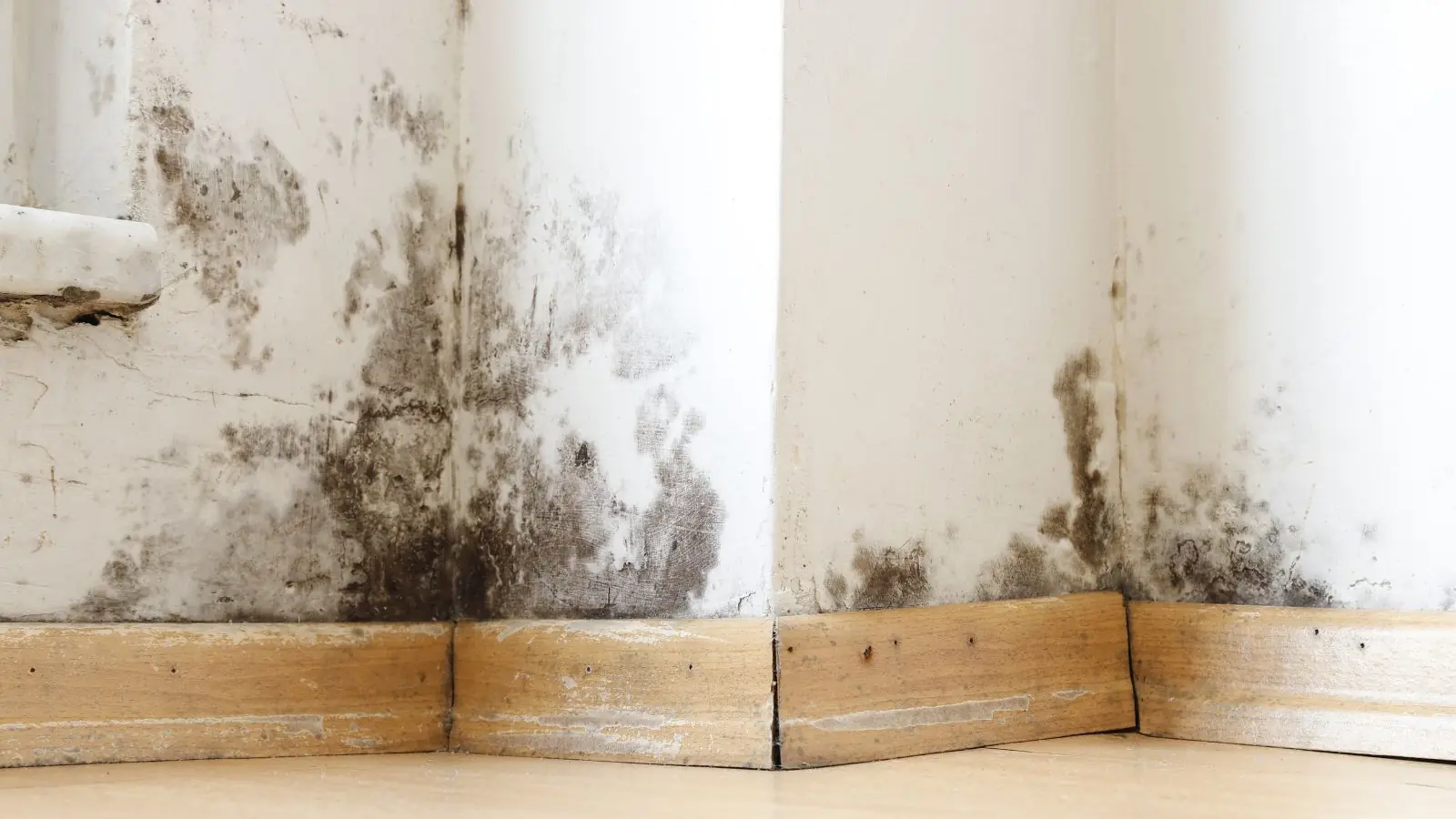
The short answer: stop the water, dry the closet, then look at the mold
If a leak soaked your closet, the mold question comes second. First find and stop the water source, then dry the walls, floor and shelving fast, because the EPA says that drying water-damaged areas within 24 to 48 hours is what prevents mold growth. If dark patches or a musty smell are already there, the closet needs a closer look before anything gets painted over.
Small surface spots on a hard shelf can often be scrubbed with detergent and water and dried completely. Growth on drywall, carpet or the back wall is a different job, and a call to a professional is the safer move.
If dark growth is already visible, mold remediation is the service that deals with it.
Why closets hold moisture so well
A closet has almost no airflow. The door stays shut, clothes sit packed against the walls, and the shelves block whatever little air exists. A wall that would dry in a day in an open hallway can stay damp for a week behind a row of coats.
Closets also tend to sit on shared walls with bathrooms, laundry rooms and water heater cabinets. That puts supply lines, drain pipes and valves a few inches from the drywall your sweaters rest against. A slow drip inside that wall cavity ends up wetting the closet side first.
Water still spreading? The dispatch line is open 24 hours a day.
☎ Call (562) 271-5850Where the water in a closet usually comes from
Callers who find closet mold almost always mention a recent leak somewhere nearby. These are the sources worth checking before you blame humidity alone.
- ✓AC condensate line. Air handlers in hall closets or attics drain through a small pipe. When it clogs, the drain pan overflows into the wall or floor around the closet.
- ✓Washer supply valve. A laundry closet with a stacked washer has two braided hoses and two valves. A weeping connection can soak the baseboard for days without a visible puddle.
- ✓Bathroom shared wall. A leaking shower valve or toilet supply line behind a bathroom wall wicks into the closet drywall on the other side.
- ✓Roof or siding leak. Water that runs down inside an exterior wall shows up first as a stain on the closet ceiling or the back wall.
- ✓Slab or floor moisture. On slab-on-grade homes, a leaking line under the floor can raise moisture in the carpet and the bottom of the wall.
The first 48 hours, step by step
Speed matters more than tools here. Work in this order, and stop if you see sewage or if water is near outlets or the panel.
- 1Stop the source. Close the nearest shut-off valve or the main valve, and fix or isolate the leak. Drying a wall that is still being rewetted wastes every hour.
- 2Empty the closet. Pull clothes, boxes and shoes out and sort them. Anything soaked and soft should be photographed, bagged and kept apart from dry items.
- 3Open it up. Take the door off its track if you can and point a box fan across the opening. Moving air is the cheapest way to dry a small space.
- 4Check the wall. Press the lower drywall with a flat hand. Soft, crumbly or cool-to-the-touch paper means water is still inside the wall.
- 5Photograph everything. Wide shots and close-ups, with dates on your phone, help if you file an insurance claim later.
Do not caulk, paint or stain-block over dark spots. Sealing a damp wall traps the moisture and makes the real condition harder to see.
When a closet job is bigger than it looks
The EPA's mold cleanup guidance points to professional help when growth covers more than about 10 square feet or when there has been a lot of water damage. A closet rarely measures that much on its face, but the hidden side of the wall often does. Mold on the back of a drywall panel can run much further than the spot you can see.
The same EPA page says absorbent or porous materials such as ceiling tiles and carpet may have to be thrown away if they become moldy. In a closet, that usually means carpet, carpet pad and the lower strip of drywall. Hard materials like wood shelving can often be cleaned and dried.
Cleaning versus remediation in plain terms
What a homeowner can reasonably do
For a few small spots on a sealed shelf or a painted baseboard, the EPA advises scrubbing with detergent and water and drying the surface completely. Wear gloves and eye protection, and keep the door open for airflow. If you have any health concerns, ask a physician before you start cleanup.
What calls for a professional
Remediation covers containment barriers, negative air with HEPA filtration, removal of affected porous materials and drying to a documented target. The published industry reference is ANSI/IICRC S520, which any company can be asked about. A contractor who skips containment in a closet can push spores into the bedroom.
If the leak was sewage or other contaminated water, the EPA says to call in a professional rather than attempt it yourself.
Fix the leak first, or the mold returns
The EPA is blunt about this point. If you clean up mold but do not fix the water problem, then most likely the mold problem will come back. Mold needs moisture, and a closet with an active drip behind the wall is moisture on a schedule.
That is why a good mold job starts with the source. A moisture meter and a thermal imaging camera help trace damp areas in the wall without tearing it open. When the leak is part of a bigger loss, water damage repair in Santa Fe Springs comes after the drying and any mold work, so the new drywall goes onto framing that has actually dried out.
If your home is just outside the city, the same approach holds in Whittier and Norwalk, where crews are also dispatched from Santa Fe Springs.
What to do with the clothes, boxes and shelving
Sort by material. Hard wood or metal shelving can usually be wiped with detergent and water, dried fully and returned. Cardboard boxes that sat on a wet floor are rarely worth keeping, and paper files should be photographed or copied before they go.
Fabric is harder to judge. Launder or dry-clean washable items, air out the rest in the sun, and discard anything that still smells musty after cleaning. Keep a list of what you throw away, because an insurer may ask for it.
What Santa Fe Springs homeowners can look up locally
The City of Santa Fe Springs has a 2025 Local Hazard Mitigation Plan approved by FEMA. The published summary does not detail every hazard, so this article does not claim any specific risk for your street. If you want to know how the city plans for water and flood events, the plan is the document to ask the city about.
For repair work after a leak, the Building and Safety Division at City Hall, 11710 E. Telegraph Road, is the office to ask about permits. The city says appropriate permits must be obtained before any project that involves repairs or alterations, but it does not list which repairs need one. Ask the division before you open a wall or replace plumbing.
Source type: City of Santa Fe Springs Building and Safety page and the city's hazard mitigation plan listing
Frequently asked questions
Not always, but a leak is the most common reason callers report. Poor airflow, a cold exterior wall and a humid room can also keep a closet damp. The way to tell is to find where the moisture is coming from, which a moisture meter reading helps with.
Hard shelving can often be cleaned with detergent and water and dried. Clothes and fabric that sat in a wet closet are harder to judge, so launder or dry-clean what you can and discard what stays musty. If a lot of items are involved, ask a professional about cleaning options.
With an open door and a fan, a surface-damp closet can dry in a day or two. A wall that took on water inside the cavity needs air movers and a dehumidifier, and readings should match a dry reference material before anything is closed up.
Not necessarily. Many remediation plans start from visible growth and moisture readings. Independent testing or clearance after the job is something to ask about, especially if a buyer's lender is involved in a home sale.
Sudden and accidental water damage is often covered, and gradual leaks and neglect often are not. Mold coverage varies a lot by policy, so check your policy or ask your insurer before work starts. Photos and dates help either way.