The short answer
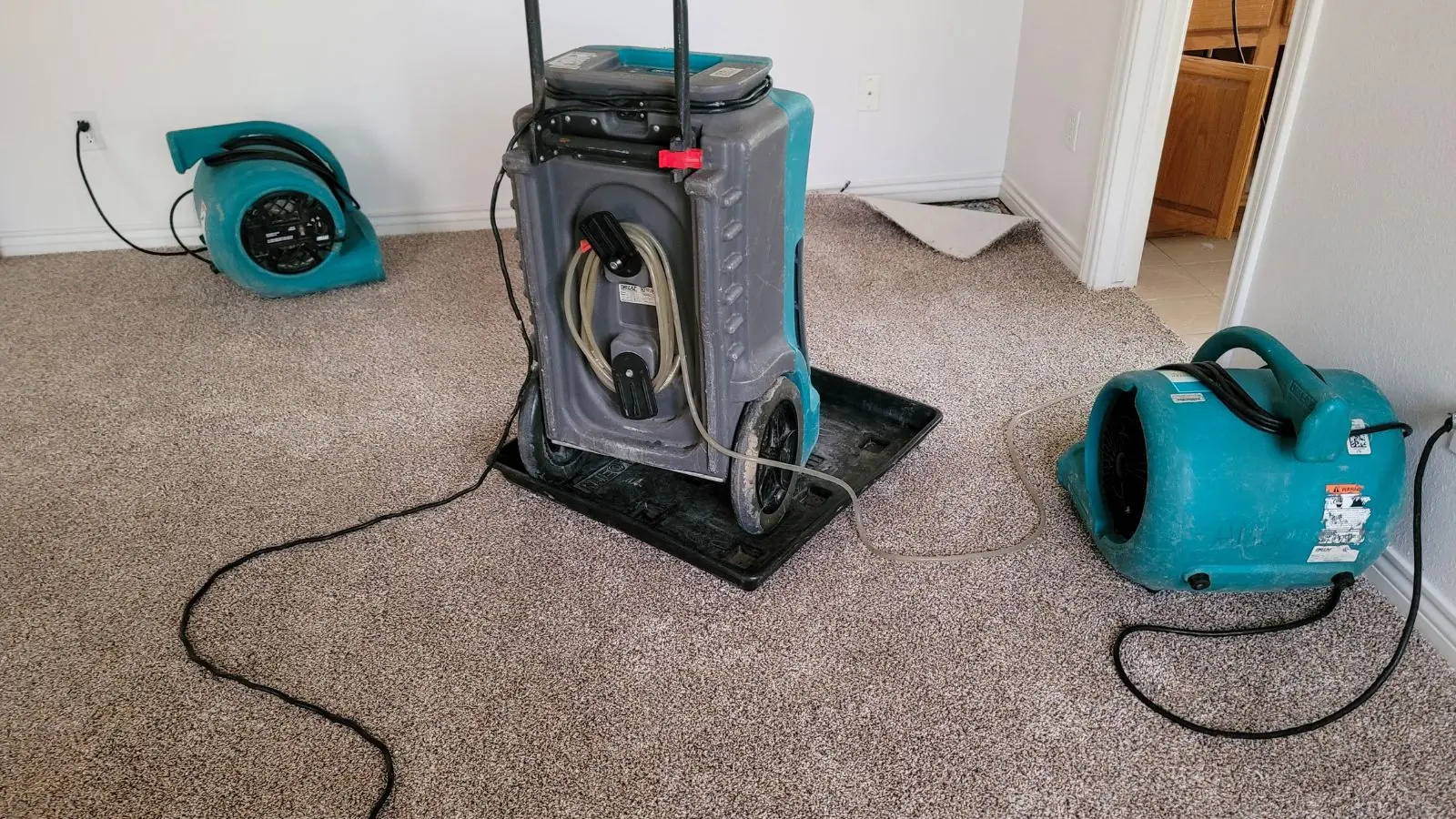
There is no single drying time for water damage. It depends on the materials that got wet, how far the water spread, how much was removed early and what the drying equipment and conditions look like. The only fixed number worth knowing is the EPA advice to dry water-damaged areas and items within 24 to 48 hours to prevent mold growth.
Anything beyond that is measured, not guessed. A technician reads moisture meters daily and the job ends when the readings match dry reference materials.
Materials and how they dry
| Material | Drying considerations |
|---|---|
| Drywall | Absorbs fast and loses strength. Often removed if saturated, or dried in place if lightly wet and clean. |
| Wood framing | Dries slowly from the inside out. Needs air access to the cavity and meter readings to confirm. |
| Hardwood flooring | Dries in a controlled way to limit cupping and splitting. Cupped boards may flatten or be replaced. |
| Carpet and pad | The pad holds water and is often discarded. Carpet may be saved if the water was clean and action was fast. |
| Concrete slab | Holds moisture the longest and releases it slowly. Needs dehumidification and testing before flooring goes back. |
| Insulation | Wet batts lose their value and hold water against framing. Usually removed and replaced. |
| Plaster and lath | Dense and slow. Drying takes patience and monitoring, and patching comes after. |
No times are promised here because every loss differs. Readings decide when drying is complete.
Water still spreading? The dispatch line is open 24 hours a day.
☎ Call (562) 271-5850What to do while the drying runs
Do not turn drying into a guessing game. Do not open sealed-off rooms, unplug drying equipment or move air movers on your own, because that changes airflow and slows drying. Do not assume a surface that feels dry is dry inside.
Do keep records of readings and dates, tell the crew about new stains, and call if you smell musty odors. A rising smell or a new stain means moisture is still somewhere.
What speeds drying up
- ✓Removing standing water first with extraction units or wet vacuums.
- ✓Starting within the first day or two, before materials soak deep.
- ✓Opening wall and floor cavities so air can reach hidden wet spots.
- ✓Using LGR dehumidifiers with air movers, not fans alone.
- ✓Keeping the area closed off so dry air is not diluted by outside humidity.
- ✓Fixing the source so no new water is added.
What slows drying down
Dense materials like concrete and plaster hold water longer than lightweight ones. Layers matter too, since a vinyl floor over wet subfloor traps moisture beneath it, and painted or sealed surfaces release water more slowly.
Contaminated water adds another delay. Category 2 and 3 water means porous materials come out before drying begins, which changes the job rather than just the timeline. A hidden wet area behind a wall that no one has opened is the most common reason a job runs longer than expected.
Why the first 24 to 48 hours matter
The EPA says that if wet or damp materials are dried within 24 to 48 hours after a leak or spill, in most cases mold will not grow. It also says mold needs water or moisture to grow, and that moisture control is the key to mold control.
So the practical rule is simple. Stop the source, remove standing water, and get drying started quickly. If water has reached outlets, cut power only if the panel can be reached dry, and call the utility or 911 for electrical or gas risk first.
How drying is monitored
A technician takes baseline readings on unaffected materials of the same type, then tracks the wet materials against them. Thermal imaging cameras help find cool, wet areas behind walls, and moisture meters give numbers for wood, drywall and concrete. Readings are repeated over the days of drying.
If a material is not responding, the setup is changed. Air movers are repositioned, dehumidifiers adjusted or a wall opened further. This is the core of water mitigation, and it ends when the structure meets the dry goal, not after a set number of days.
Renting equipment versus professional drying
Callers often ask about renting air movers and dehumidifiers. Equipment alone does not tell you where the hidden water is, and a surface that feels dry may still have wet framing behind it. Without meter readings, it is easy to stop too soon and leave moisture behind.
If water is actively spreading, emergency water removal is the fastest way to get the first step done. Ask any company to explain how it will decide when drying is complete.
Scenarios that change the drying picture
Burst pipe under a sink
Water collects in the cabinet and runs into the wall behind it. Drying focuses on the cabinet base, the wall cavity and the flooring beneath.
Crawl space with water
Standing water below the floor means wet joists, subfloor and sometimes insulation. Extraction, ventilation and dehumidification all play a part, and drying is monitored by readings.
Slab homes after a supply line failure
Concrete holds moisture longest, so flooring that sits on it needs readings before it is replaced. Installing new floor over a damp slab can cause trouble later.
The same logic in neighboring cities
Drying works the same wherever the loss happens. A flooded hallway in La Mirada and a wet kitchen wall in Downey both need the source stopped, the water extracted and the readings tracked until they match dry reference materials.
The differences come from the materials and the home, such as plaster versus drywall and slab versus raised foundation. Describe those when you call.
Insurance and drying records
Many insurers expect reasonable steps to limit further damage, and drying records can show what was done. Sudden and accidental water damage is often covered while gradual leaks often are not, so check your policy and ask your insurer. Keep moisture logs, photos and invoices.
Flood damage is usually excluded from standard homeowners insurance and requires separate flood coverage, such as an NFIP policy.
Winter rain and the dry-out calendar
The National Weather Service 1991 to 2020 normals for the Downtown Los Angeles station, not a Santa Fe Springs station, give 14.25 inches of rain in a year. December averages 2.48 inches, January 3.29, February 3.64 and March 2.23, with almost none from June through August. Rain is concentrated in winter, so roof, gutter and drain checks belong before then.
The practical point for a wet home is timing. Finish drying, and any open wall or floor repairs, before the winter months so a new leak is not landing on a half-repaired structure. Clear gutters and storm drains, and report blockages to local public works.
Source type: National Weather Service Los Angeles/Oxnard 1991 to 2020 climate normals for the Downtown Los Angeles station
Frequently asked questions
No. Surfaces can feel dry while framing, subfloor or insulation behind them is still wet. Moisture meters and thermal cameras show what your hand cannot.
Drying is complete when readings match dry reference materials.
Fans and fresh air help with minor spills, but they rarely dry wall cavities or concrete fast enough. Dehumidification removes moisture from the air so it can keep pulling water out of materials.
For anything beyond a small clean spill, use meter readings to confirm.
Air has to reach the wet cavity. Small openings or removing baseboards lets air movers push dry air through, and it lets the technician see and measure hidden damage.
It is often cheaper to open small than to guess.
No. Drying stops the damage from getting worse. Repair comes after, and may include new drywall, flooring, trim and paint.
Restoration is not waterproofing, so the water source still needs its own fix.
Rain is concentrated in the winter months according to the National Weather Service normals for Downtown Los Angeles. Check roofs, gutters and drains and finish open repairs before then.
The next block of rain is easier to handle with dry walls and clear drains.