What to do first, in one paragraph
Keep everyone out of the water, because floodwater can carry sewage, chemicals and debris. If it is safe, switch off power to the affected area. Photograph the damage, then call a professional to extract the water and start drying.
Ready.gov advises avoiding wading in floodwater, which can be contaminated and contain dangerous debris, and returning home only when authorities say it is safe.
Safety before cleanup
Flood water that enters from outside is usually treated as grossly contaminated, which the ANSI/IICRC S500 standard calls Category 3. That label covers storm runoff, river water and sewage backup. Carpet, pad and porous drywall that touched it are generally removed, not cleaned.
Never use an outlet, extension cord or wet vacuum in standing water. If the electrical panel sits in a flooded garage or utility closet, do not step in. Call the utility or 911 before you call the restoration line, and let the professionals handle power.
- ✓Wear waterproof boots, gloves and eye protection if you must enter at all
- ✓Do not walk, swim or drive through flood waters outside the home
- ✓Keep children and pets out of any room with standing water
- ✓Do not run gas appliances, heaters or generators indoors
Water still spreading? The dispatch line is open 24 hours a day.
☎ Call (562) 271-5850Sandbags: what they can and cannot do
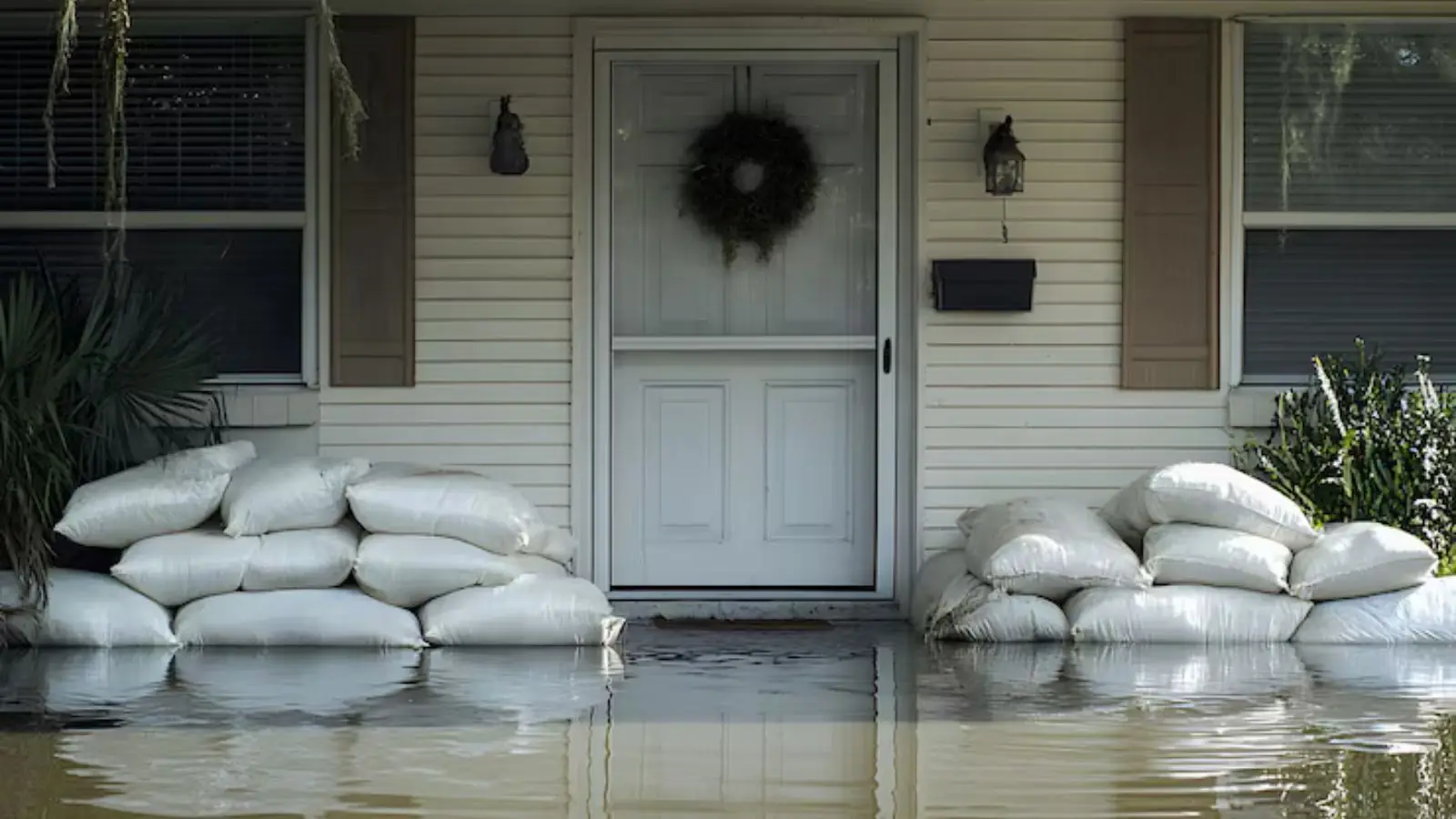
Los Angeles County's sandbag guide says to fill bags about half full, fold the top, and set the folded edge uphill. Stack no more than two layers, because tall stacks are unstable, and do not substitute straw or hay bales.
Sandbags suit shallow flows, up to roughly 2 feet, and they are not watertight. They slow and redirect water around a garage door or entry. They do not seal a doorway, so expect some seepage and plan for pumping and drying if water still gets through.
The first hours: a working order
People often ask what to do once water is already inside. The order below puts safety ahead of salvage.
- 1Stop new water if you can. Close the main water valve if a pipe or appliance is involved. If runoff is entering, block the low spot with sandbags or boards only while it is safe to be outside.
- 2Cut power to wet areas. Only from a dry, reachable panel. Otherwise stay back and call the utility.
- 3Photograph high-water marks. Take wide shots, then close-ups with a tape measure beside the stain line. Date and time matter to a claim.
- 4Call for extraction. Pumps and truck-mounted or portable extraction units remove standing water far faster than buckets and towels. Same-day response is available when crews are free, and no arrival time is promised.
- 5Lift and set aside. Move salvageable items onto dry surfaces. Set aside porous items that sat in the water, such as mattresses, rugs and stuffed furniture, and ask a professional before you discard anything of value.
What professionals do once they arrive
A crew begins by finding where the water went. Moisture meters read wood, drywall and concrete, and a thermal imaging camera shows cooler wet areas behind finishes. Extraction follows, then removal of materials that cannot be dried or cleaned safely, such as saturated carpet pad and the lower portion of wet drywall.
After that, the structure is cleaned and treated, then dried with air movers and LGR dehumidifiers. Daily readings track progress against dry reference materials, and the job is done when the readings match. Services like flood damage restoration cover this whole sequence, from extraction to the point where rebuilding can begin.
Keep, clean or throw away
Hard, nonporous items such as glass, metal and many plastics can usually be cleaned and sanitized. Porous items that soaked in floodwater, including carpet, upholstery, mattresses and particleboard cabinets, are often replaced. Photograph them before discarding so your insurer can see what was lost.
Papers, photos and keepsakes are worth special effort. Freeze wet documents in a sealed bag until you can have them dried properly, and ask a conservator or the restoration crew what can be saved.
Drying, mold and the 48-hour window
The U.S. EPA says water-damaged areas and items should be dried within 24 to 48 hours to prevent mold growth, and that none of the many types of mold grow without water or moisture. That is why extraction cannot wait for a convenient weekend.
If water stays in the wall cavity or under the flooring, hidden moisture can feed growth long after the surface looks fine. A crew checks readings inside the wall, not just on the surface. For wider cleanup beyond the flooded rooms, emergency water removal is usually the first step before drying equipment goes in.
Cleaning and disinfecting after the water is gone
Once the standing water is out and the structure is drying, hard surfaces are scrubbed with detergent and water, then treated with a disinfectant suited to the surface. Studs, subfloor and concrete are cleaned in place, while porous materials that soaked in contaminated water are cut out and bagged. Crews wear gloves, boots and respirators for this stage.
Air scrubbers with HEPA filters run during demolition to catch dust, and containment barriers of plastic sheeting keep the work area separate from clean rooms. Ask what disinfectant is used and where it was applied. Records of that step matter if the insurer or a future buyer asks what was done.
Nearby neighborhoods and the flood map
Flooding questions come from the whole area, from Pico Rivera to Downey. Your flood risk depends on your address, not your city. Look up your property on the FEMA Flood Map Service Center and ask your insurer about flood coverage.
County sandbag guidance for storm season
Los Angeles County's flood preparation advice is to store sandbags, plywood and plastic sheeting before storms, clear gutters and drains, and report blocked storm drains to local public works. It also points residents to the FEMA Flood Map Service Center, Cal OES My Hazards and Los Angeles County Public Works to check flood risk.
For a Santa Fe Springs home, that means doing the prep during the dry months, since Downtown Los Angeles station normals show winter carrying the rain. Check your gutters and downspouts, know where you would put bags, and confirm what your policy says about flood before the first storm.
Source type: Los Angeles County emergency preparedness flooding guidance and sandbag guide
Frequently asked questions
Usually not. Floodwater can carry sewage and chemicals, and ready.gov warns that it can contain dangerous debris. If the water came from outside or from a sewer line, call a professional.
Small clean-water spills from a supply line are different. Even then, thorough drying matters more than surface cleaning.
As fast as possible. The EPA says to dry water-damaged areas within 24 to 48 hours to prevent mold growth.
Call the 24/7 line and describe the loss. Same-day response is available when crews are free, and arrival times are not promised.
Not everything. Nonporous items often clean up, while carpet, pad and soft furnishings that soaked in contaminated water are commonly replaced.
Photograph before discarding and ask the crew for their view on each item.
The California Department of Insurance says standard homeowners policies do not cover flood damage. Separate flood coverage is available through the National Flood Insurance Program.
Ask your insurer how your policy treats your type of water. Do not assume coverage either way.
Rain is concentrated in winter. The National Weather Service Downtown Los Angeles station normal is about 14 inches a year, with almost none from June through August.
That figure is for the downtown station, not Santa Fe Springs itself. Prepare sandbags and clear drains before winter.