The short answer
Mold needs moisture, so the fix starts with finding and stopping the water. Then the crawl space is dried, damaged materials are cleaned or removed, and any mold is handled following the ANSI/IICRC S520 standard for professional mold remediation.
Do not spray the space with a cleaner and close the hatch. If the water source is still active, growth will return.
Where crawl space water comes from
- ✓Plumbing leaks. Supply lines, drain lines and old shutoff valves under the floor. A pinhole in a copper line can drip for months.
- ✓AC condensate lines. A clogged or disconnected condensate drain can discharge directly under the house.
- ✓Drainage. Downspouts or grading that send roof and yard water toward the foundation vents.
- ✓Washer, tub and toilet connections. A slow leak at a drain or wax ring can run down into the space below.
- ✓Sewer or floor drain backup. This is contaminated water and calls for professional handling and protective gear.
Raised foundations are common in Southern California alongside slab-on-grade homes, so check which you have before assuming where a leak is going.
Look for a trail. Wet soil below a bathroom points to a drain, damp joists near the furnace point to condensate, and a wet area near the foundation vents points to drainage outside the house.
Water still spreading? The dispatch line is open 24 hours a day.
☎ Call (562) 271-5850What mold needs, and what the EPA says
The U.S. EPA says none of the many types of mold will grow without water or moisture, and that the key to mold control is moisture control. It also says that if wet areas are dried within 24 to 48 hours of a leak, mold generally will not grow. A crawl space that stays damp for weeks is outside that window.
The EPA also notes that if you clean up mold but do not fix the water problem, it will most likely come back. That is why a plumber or the right trade fixes the leak before any remediation starts. Mold cannot be identified reliably by sight, and health questions belong with a physician.
Signs of trouble below the floor
- ✓A musty odor in the house that gets stronger near floor vents
- ✓Floors that feel soft, cupped or cold in one area
- ✓Visible staining or fuzzy growth on joists, subfloor or insulation
- ✓Insulation sagging or falling from the floor above
- ✓Standing water, wet soil or pest activity near the access hatch
- ✓Higher than expected water bills with no visible leak
How a crawl space is assessed and dried
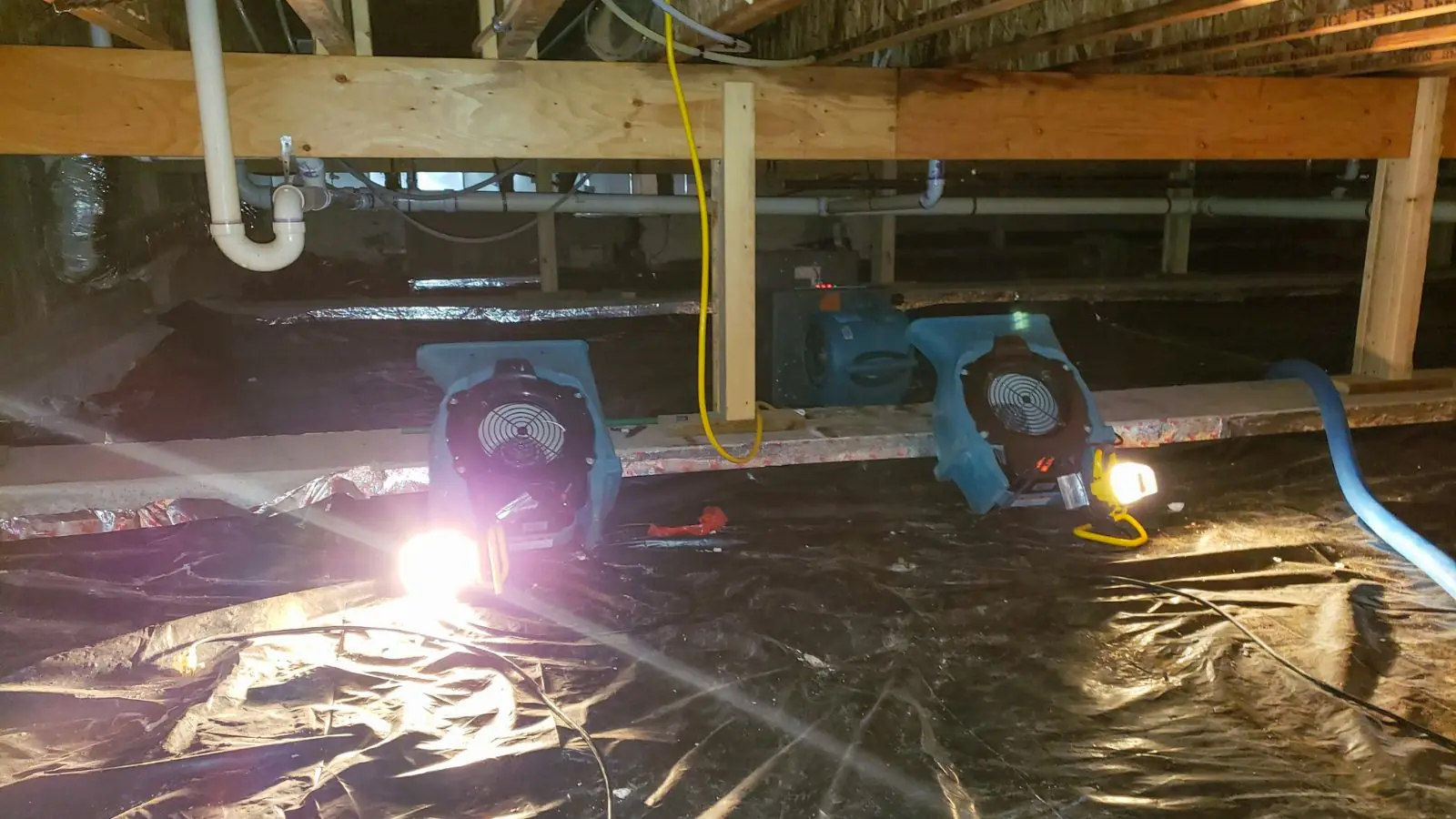
A technician enters with protective gear and a moisture meter, checks the wood framing and subfloor, and uses a thermal imaging camera to look for cool, wet areas. Soil moisture is noted, and a vapor barrier, if there is one, is checked for gaps. Photos document what is found.
If water is present, a pump or wet vacuum removes it. Air movers and LGR dehumidifiers dry the framing, and containment barriers and HEPA air scrubbers separate the work area from the living space if mold is present. Wet insulation is usually removed because it holds moisture against the subfloor.
When the cause is a plumbing or appliance leak, mold remediation only begins once the leak has been repaired and the space is drying.
Testing, clearance and selling a home
Some lenders and buyers ask for documentation that mold has been addressed. Independent clearance testing, done by a third party and not by the remediation company, is one way to provide it. We do not promise that a lender will accept any report.
If you are selling, tell the remediation company early so the scope and the paperwork match what the buyer's side wants to see.
Dry the space, then repair
After drying, damaged joists may be treated or sistered, subfloor replaced and insulation reinstalled. Restoration is not waterproofing, and a drying job does not change grade or drainage. For persistent moisture, a drainage fix or vapor barrier upgrade may be recommended separately.
Where water has moved from the crawl space into the rooms above, water damage cleanup covers the cleaning of floors, walls and contents. Neighbors in La Mirada and Pico Rivera often ask about raised foundations for this reason.
Scenarios we hear about most
A common call involves an AC condensate line that backed up or came loose and has been dripping onto the soil and joists for a season. Another is a pipe under a bathroom that was fine for decades until a corroded fitting started to weep. A third is a washer drain that was never fully connected and has been draining below the floor.
In each case the sequence is the same. Stop the leak, remove standing water and wet insulation, dry the framing and check the readings before anything is closed up. If growth is present, containment and air filtration go in first.
What affects the cost
Cost factors include the water category, the size of the crawl space and how hard it is to access, the amount of wet insulation and wood, the days of drying equipment, whether containment and air filtration are needed and the scope of rebuild. A cramped space with a low clearance takes longer.
Insurance often responds to sudden leaks and often does not respond to long-term seepage, so check your policy. Want your real number? Call and describe the loss, and the scope and price are explained before work starts.
Access matters more than most people expect. An 18-inch hatch, a tight run of ductwork or a low joist line can double the labor for the same square footage, so photos of the entry help a technician plan equipment before arriving.
Ask City Hall before you open the floor
The Santa Fe Springs Building and Safety Division is at City Hall, 11710 E. Telegraph Road. The city states that appropriate permits must be obtained prior to the start of any project, including remodeling, alterations or repairs and demolition. Its page does not say which specific repairs, such as plumbing, drywall or water heater work, need permits.
So the practical step is a phone call or visit before the work starts. Describe the repair, such as replacing joists, subfloor or plumbing in the crawl space, and ask whether a permit applies. Have your contractor confirm that the scope matches what the division told you.
Source type: City of Santa Fe Springs Building and Safety Division page
Frequently asked questions
Some humidity is common, but standing water, wet soil, dripping pipes or visible growth are not normal and point to a source.
A moisture meter reading helps tell the difference.
A dehumidifier treats the air, not the leak. If a supply line or condensate line is still dripping, the space will keep taking on water.
Find and fix the source first, then dry the space.
It depends on the work. The City of Santa Fe Springs says appropriate permits must be obtained before any remodeling, alteration or repair project, and its page does not list which specific repairs need one.
Ask the Building and Safety Division at City Hall before work starts.
A plumber or the appropriate trade repairs the leak. A restoration company dries the space and handles any remediation.
Ask whether the contractor is properly licensed.
Stay out. Sewage is contaminated water and needs professional handling. If you smell gas or see electrical hazards, call the utility or 911 first.
Then call the restoration line.