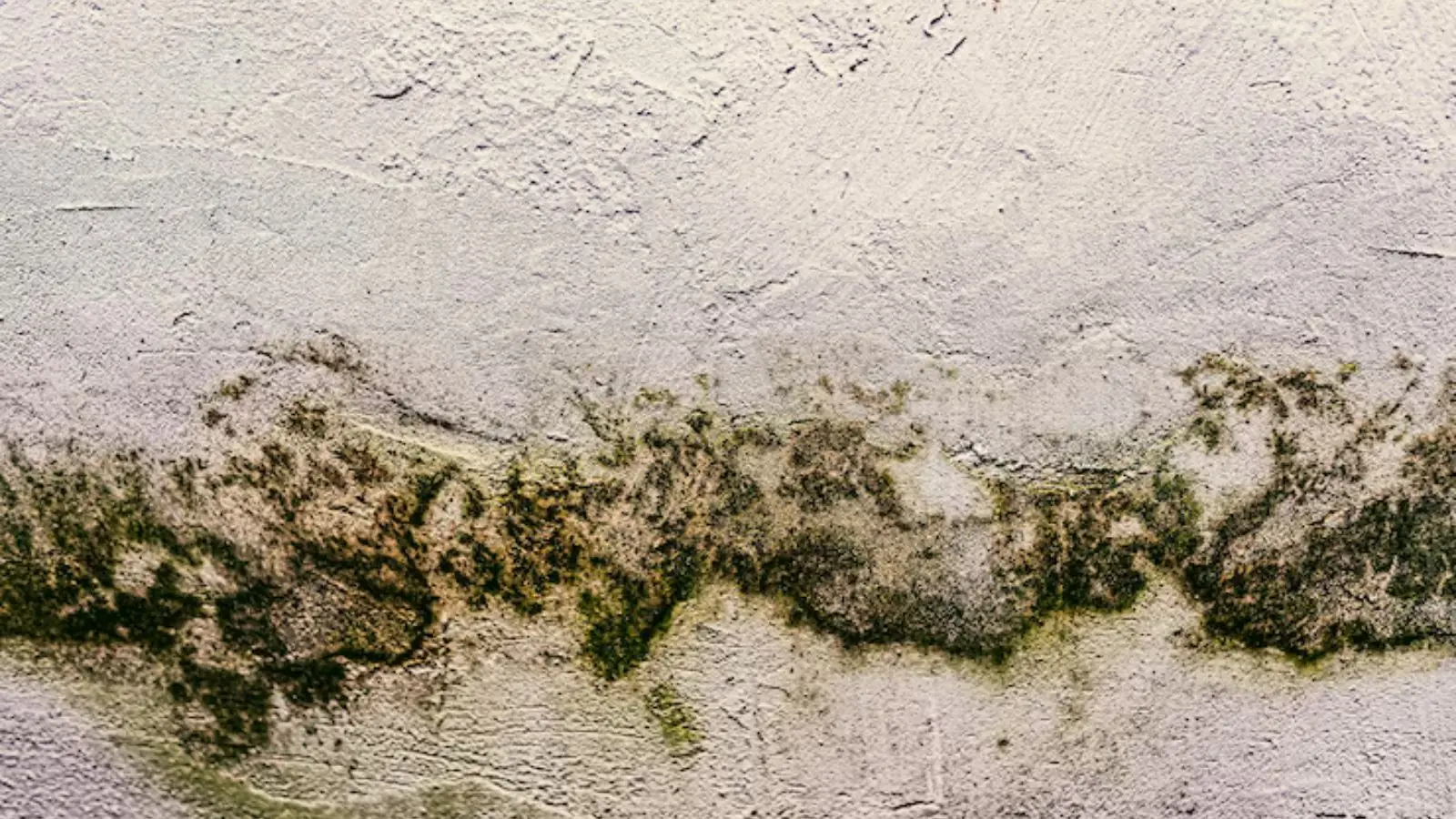
The short answer: you cannot reliably tell by looking
Mildew is a common name for certain surface molds, usually flat, powdery or downy growth on bathroom tile, shower curtains or window sills. Mold is the broader term and can grow deeper into materials like drywall, wood and carpet. Color, however, is not a dependable clue. Black, green, white and gray growth can all show up on the same damp wall, and identifying a species by eye is unreliable.
What matters is the same in both cases. Something is wet, and the EPA says none of the many types of mold will grow without water or moisture.
What people usually notice, side by side
| Feature | Often called mildew | Often called mold |
|---|---|---|
| Typical look | Flat, powdery or downy, white, gray or yellowish | Fuzzy, slimy or speckled, in black, green or other colors |
| Where it shows up | Surfaces such as shower tile, window sills and curtains | Surfaces and deeper layers such as drywall, ceiling tile and carpet |
| Texture when wiped | Often wipes off a hard surface | Can leave stains or reach under the surface |
| Smell | Musty | Musty, sometimes stronger |
| Typical cause | Steam, condensation and poor airflow | Leaks, flooding and long-term damp materials |
These are common patterns, not a test. Both can look the same, and neither look confirms what is growing. Only testing on a sample can say more, and health questions belong with a physician.
Water still spreading? The dispatch line is open 24 hours a day.
☎ Call (562) 271-5850Why looks mislead
Color depends on the species, the material, the age of the growth and the lighting. A patch that looks black may be dirt, soot, soap scum or a dark mold. A patch that looks white and powdery might be mineral deposits from a leak.
Black mold is also a popular label, and it often gets attached to any dark growth. The label does not tell you what the growth is, how far it goes or how to handle it. Treat any suspicious growth the same way: find the moisture, protect yourself and decide who should handle it.
The moisture clock: why 24 to 48 hours matters
The EPA says it is important to dry water-damaged areas and items within 24 to 48 hours to prevent mold growth. It also says that if wet or damp materials are dried within that window after a leak or spill, in most cases mold will not grow. After that window, growth becomes more likely, whatever it is called.
That is why a pipe leak that you caught on the same day is a very different situation from a ceiling stain you noticed after a month. For a fresh leak, the first move is emergency water removal and drying. For an old stain, the first move is finding out what is wet.
The same dry-first rule applies in Pico Rivera and La Mirada, which crews reach from Santa Fe Springs.
What to do when you find a dark patch
- 1Find the water. Look for a leak, a condensation point or poor ventilation. Fix plumbing leaks and other water problems as soon as possible, as the EPA advises.
- 2Measure, do not guess. A moisture meter tells you whether the material behind the patch is wet. A thermal imaging camera can show cool damp zones.
- 3Size it up. The EPA points to professional help when growth covers more than about 10 square feet or when there has been a lot of water damage.
- 4Clean only what is small and hard. Scrub small areas on hard surfaces with detergent and water and dry completely. Porous materials such as ceiling tile and carpet may have to be thrown away.
- 5Ask a physician about health questions. If you have any concerns, consult a health professional before starting cleanup.
Testing, clearance and S520
The published industry standard for professional mold remediation is ANSI/IICRC S520, and any company can be asked how it follows it. Testing can include air or surface samples, but results must be read in context, and they do not replace fixing the moisture. Independent clearance testing after remediation is something to ask about when a home sale or loan is involved, because a buyer's lender may want documentation.
The EPA also says that if you suspect a hidden mold problem, consider hiring an experienced professional. A musty smell with no visible growth is the typical case. Mold remediation in Santa Fe Springs starts from moisture readings, not from the color of the patch.
A note on contaminated water
If the water behind a patch came from sewage or other contaminated sources, stay out of the area and call a professional. The EPA says to call in a professional if sewage or contaminated water caused the damage. Do not scrub or vacuum the area yourself.
If the patch sits near wet outlets or a panel, keep clear and call the utility or 911 for electrical risk before you call the restoration line.
Everyday places where the confusion starts
Bathrooms are the usual setting. Dark grout lines, a shower curtain with speckled edges and the corner of a window sill all get called mildew. A ceiling stain in a hall after a roof leak or an AC drain overflow tends to get called mold.
The place matters less than the cause. Condensation on a cold window needs better airflow, while a stain spreading under paint needs a leak found. If you cannot say which one you have, a moisture reading tells you.
Keep photos with dates of any patch you find, and note when the last leak or spill happened. That record helps a company, an insurer or a city office understand the timeline quickly.
If you are unsure which rules apply, ask the city
The City of Santa Fe Springs Building and Safety Division is at City Hall, 11710 E. Telegraph Road. The city says appropriate permits must be obtained prior to any project covering remodeling, alterations or repairs. It does not say which specific repairs need one after a leak or mold removal.
So the answer is to ask your city building department before work starts. Bring a short description of the damage and the planned repair, and ask who pulls the permit. If your home is in a nearby town, the same question goes to that city's building division.
Source type: City of Santa Fe Springs Building and Safety Division page and U.S. EPA moisture and mold guidance
Frequently asked questions
Color alone does not answer that, and this site does not give health guidance. Sight identification is unreliable, so treat any growth as a sign of moisture to find and fix. A physician can answer health questions.
Kits can show that spores are present, which is almost always true indoors. They do not tell you how much growth is hidden or what to do next. Moisture readings and a professional assessment give clearer direction.
No. Paint over a damp surface hides the patch and traps the moisture. The EPA says the key to mold control is moisture control.
Widespread growth, more than about 10 square feet, a lot of water damage, sewage, or a hidden musty odor are all reasons to call. When in doubt, ask. A site visit with a moisture meter settles most of the uncertainty.
Ask the Building and Safety Division at City Hall, 11710 E. Telegraph Road. The city says permits are required for repairs and alterations but does not list which ones, so asking your city building department is the safe route.