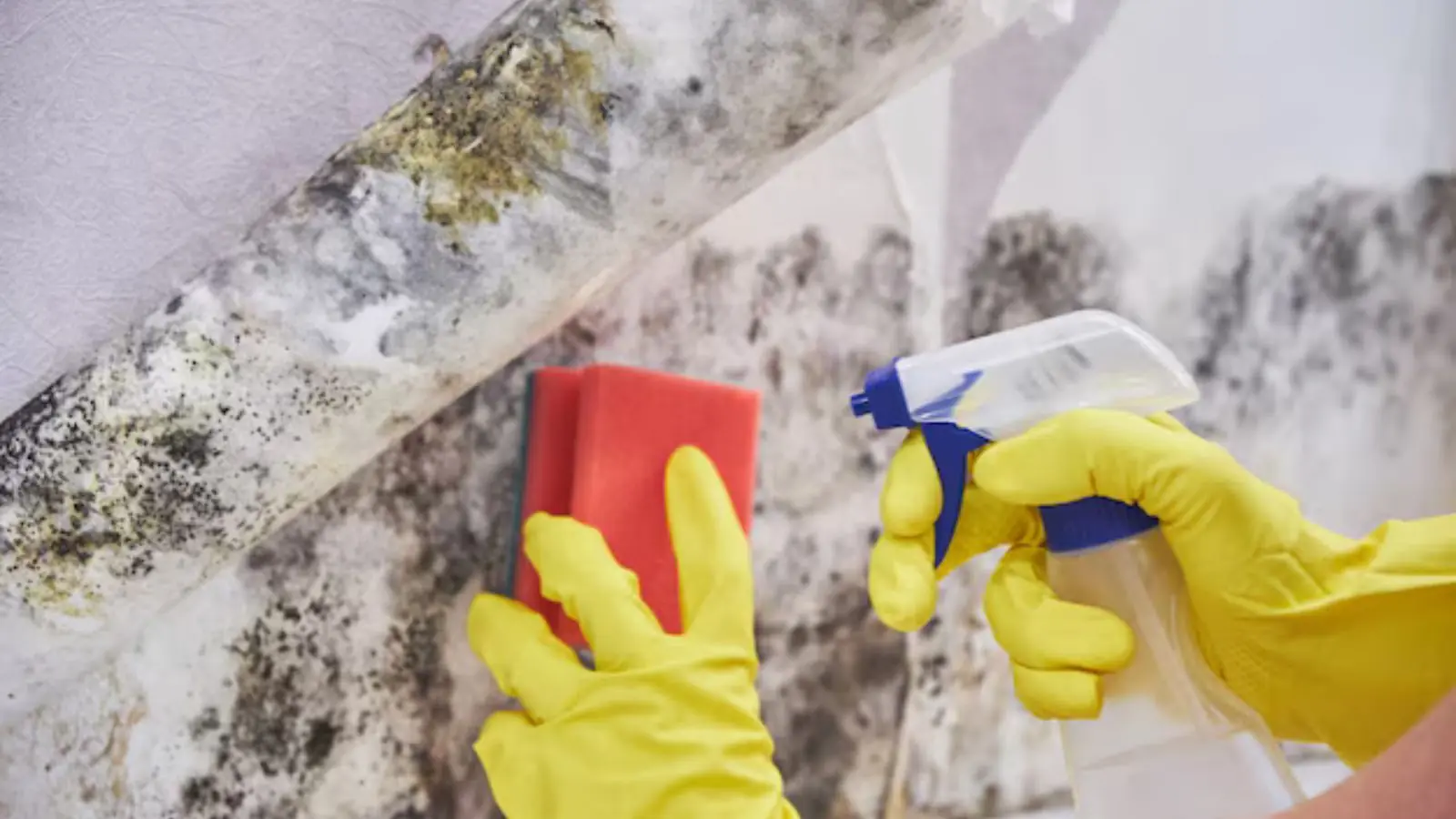
The short answer: surface spots can be scrubbed, soft walls cannot
Dark spots on silicone caulk or grout lines are usually surface growth fed by a wet shower. The EPA says to scrub mold off hard surfaces with detergent and water and dry them completely. If the spots return within weeks, or the wall behind the tile feels soft, water is likely getting behind the surface and the job is bigger.
Color alone does not tell you what you have. Black spots can be mold, mildew, soap scum or dirt, and nobody can reliably identify them by sight.
If growth runs behind the surface, mold remediation is the next step.
Where the wall is wet, water damage cleanup handles the drying and tear-out before any mold work.
Why showers are the perfect place for growth
A shower gets wet every day, and the bathroom often has a small fan or none at all. Caulk joints, grout lines and the bottom row of tile stay damp long after you step out. Mold needs only moisture and something to feed on, and soap residue and skin oils supply that.
The EPA puts it simply. The key to mold control is moisture control. In a bathroom, that means faster drying more than stronger cleaners.
Water still spreading? The dispatch line is open 24 hours a day.
☎ Call (562) 271-5850Surface spots or a leak behind the wall?
| What you see | Likely meaning | Next step |
|---|---|---|
| Dark dots on caulk, wipe off with a cloth | Surface growth from constant dampness | Scrub, dry and improve ventilation |
| Spots return within weeks | Moisture is staying put | Recaulk, check the exhaust fan, look for leaks |
| Grout crumbling or tile loose | Water has gotten behind the tile | Have the wall tested with a moisture meter |
| Stain on the ceiling below | Shower pan or valve leak upstairs | Stop use of the shower and call about the leak |
| Soft or spongy wall near the tub | Wet drywall or backer board | Stop cleaning, call a professional |
Sight-based guesses are unreliable. A moisture meter reading says more than the color of the spot.
How to clean a small area the safe way
This applies only to a small patch on a hard, nonporous surface with no signs of a leak.
- 1Ventilate. Open a window and run the exhaust fan. Keep people with health concerns out of the room, and ask a physician before cleanup if you have any worries.
- 2Wear protection. Gloves, eye protection and a mask are sensible. Never mix bleach with ammonia or other cleaners.
- 3Scrub with detergent and water. Use a stiff brush on grout and a soft cloth on caulk. The EPA recommends detergent and water on hard surfaces.
- 4Dry completely. Wipe with a towel and leave the fan running. Drying is as important as scrubbing.
- 5Replace failed caulk. If dark staining runs through the silicone, remove it and recaulk after the joint dries.
Signs the shower is leaking behind the surface
A shower pan that leaks, a failed valve seal or cracked grout lets water run into the wall cavity. You may not see it for months. Look for loose tiles, a baseboard that swells outside the bathroom, a stain on a ceiling or wall in the room below, or a musty smell that persists after cleaning.
Moisture meters and thermal imaging cameras can find wet backer board without demolition. When the wall is wet, the first step is drying and finding the leak, and mold remediation follows if growth is present behind the surface. Containment barriers and HEPA air scrubbers keep the work from spreading dust to the rest of the house.
Choosing a contractor for the wall work
California's Contractors State License Board says anyone who contracts for or bids on a construction project valued at five hundred dollars or more, including labor and materials, must be licensed. You can check a license at cslb.ca.gov. A tile replacement or wall rebuild easily passes that line.
The CSLB also advises paying no more than ten percent down or one thousand dollars, whichever is less, and getting a written contract with any changes put in writing. Ask the company for its scope in writing, including whether containment, drying and any clearance testing are included. The published industry reference for mold work is ANSI/IICRC S520.
The same questions apply to homes in La Mirada and Whittier, where crews are also dispatched from Santa Fe Springs.
Keeping the shower dry afterward
Run the exhaust fan during every shower and for about 20 minutes after. Squeegee the glass and tile walls, hang towels outside the shower and open the door to let the room dry. Fix any dripping showerhead right away.
A cleaned shower can grow spots again if the humidity stays high, so no cleaner can promise that growth will not return. Stopping the moisture is the only long-term fix.
What a professional looks at in a shower job
The assessment starts with moisture meter readings around the tub or pan, on the walls beside the shower and on the ceiling or floor below. A thermal imaging camera can show a temperature difference where water sits behind tile. The readings show whether the surface spots are the whole problem or the visible edge of one.
If the wall is wet, the plan usually covers stopping the leak, opening the wall, drying the cavity and removing materials that cannot be dried. Rebuilding the shower comes last, once framing reads dry.
Check the seal where the tub meets the wall every few months, and replace caulk when it cracks or peels. Small gaps let water slip behind the tile, and that is where a surface problem becomes a structural one.
Who to ask in Santa Fe Springs before you open the wall
The City of Santa Fe Springs Building and Safety Division is at City Hall, 11710 E. Telegraph Road. The city states that appropriate permits must be obtained before any project, including remodeling, alterations or repairs. Its page does not say which specific repairs, such as plumbing or drywall, need one.
Call or visit the division before you tear into a shower wall or replace a valve. Ask whether your planned scope needs a permit and whether the contractor must pull it. It takes one conversation, and it avoids surprises if you ever sell the home.
Source type: City of Santa Fe Springs Building and Safety Division page and California Contractors State License Board consumer pamphlet
Frequently asked questions
Questions about health effects belong with a physician. What can be said is that growth needs moisture, and the EPA recommends cleaning small hard surface areas with detergent and water and drying them. If you have health concerns, ask a health professional before you start.
Detergent and water are the EPA's recommendation for hard surfaces. Bleach can lighten stains without addressing the moisture, and it should never be mixed with ammonia. A stain that returns after bleaching is a sign the moisture source is still there.
Press gently on the wall near the tub. Soft, flaking or swollen drywall is a warning sign. A moisture meter gives a number, and thermal imaging can show cool wet areas behind tile.
The city says appropriate permits must be obtained before any project that includes repairs or alterations, but it does not say which ones. Plumbing changes are more likely to need one. Ask the Building and Safety Division before work starts.
Sudden and accidental water damage is often covered. Slow leaks and long-term seepage often are not. Check your policy and ask your insurer, and keep photos and dates.