The short answer: turn the system off, dry what got wet, then repair
An AC leak is usually condensate water that could not drain, so it spilled from the drain pan and soaked whatever sits below. Turn the air conditioner off at the thermostat so it stops making more water, then dry the wet materials before any repair begins. Repair means cutting out what cannot be dried and rebuilding it, and that only works on dry framing.
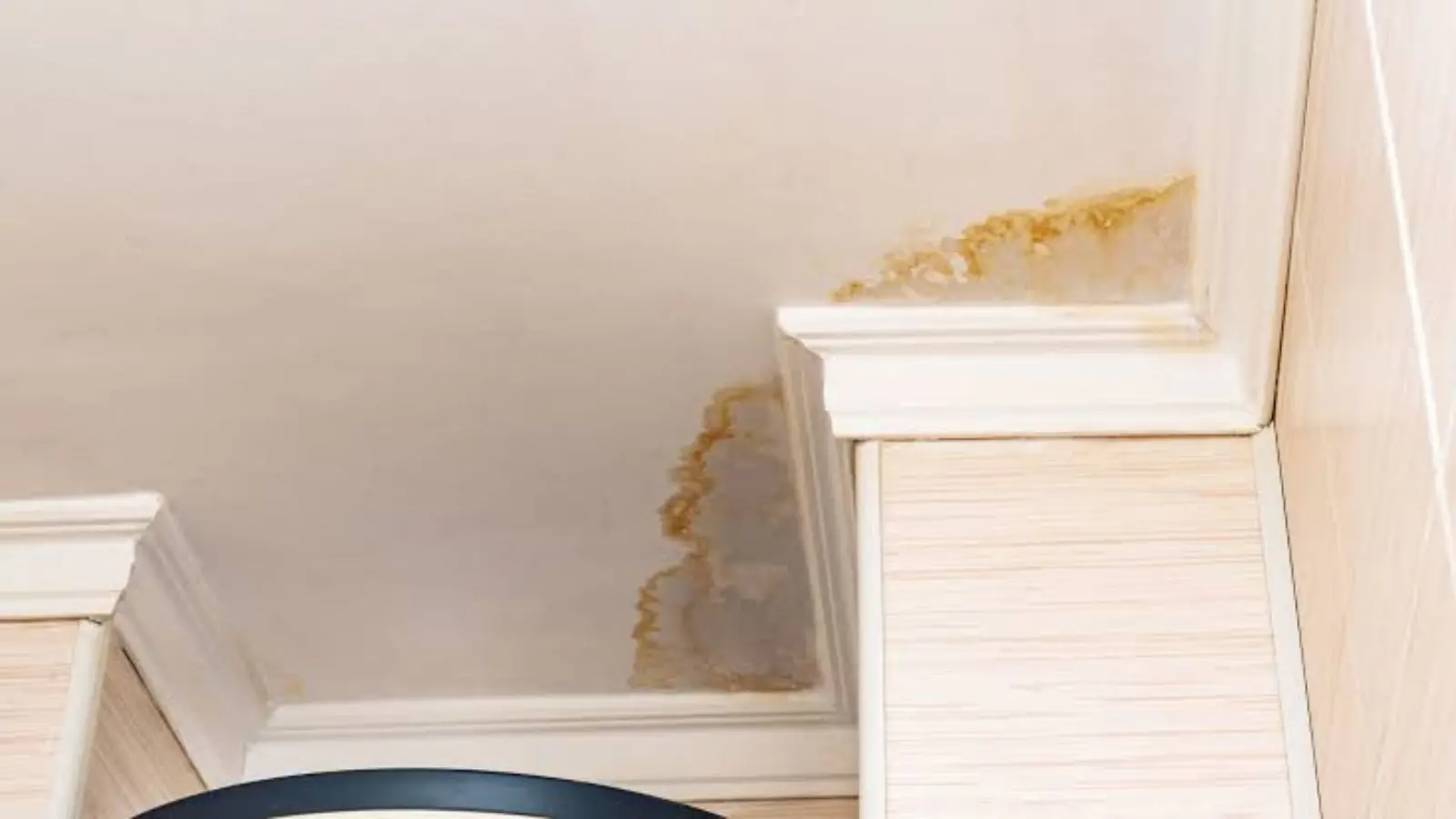
The leak is often slow. A ceiling stain the size of a dinner plate can sit on top of a much larger wet area in the insulation above it.
Water mitigation is the term for the drying stage that comes first.
How an AC makes water and why it ends up in your house
When warm indoor air crosses the cold evaporator coil, moisture condenses on it like water on a cold glass. In a hot, humid stretch a home system can make several gallons a day. That water drips into a pan and flows out through a condensate drain line, usually a three-quarter-inch PVC pipe.
Algae and sludge build up in that line. When it clogs, the pan fills and then overflows, or a float switch trips and shuts the system down. If the switch is missing or fails, the water keeps going.
Water still spreading? The dispatch line is open 24 hours a day.
☎ Call (562) 271-5850Where the damage shows up
- ✓Ceiling below an attic unit. A brown ring, a bubble in the paint or a sagging section of drywall. The insulation above holds water like a sponge.
- ✓Hall closet or utility closet. Carpet or flooring near the air handler feels damp, and the baseboard swells.
- ✓Wall beside the air handler. Paint blisters or the drywall softens at the bottom, and a musty smell appears when the system runs.
- ✓Floor under a wall furnace or a rooftop unit. Laminate edges lift, hardwood cups and subfloor stays wet for days.
If water is dripping from a light fixture or collecting near outlets, stay out of the room, cut power only if the panel can be reached dry, and call the utility or 911 for any electrical risk before you call the restoration line.
How the repair is actually done
Repair follows a sequence, and skipping the early steps is how repairs fail.
- 1Clear the drain line. A technician flushes or vacuums the condensate line so the unit stops overflowing. This is an HVAC job, separate from the restoration work.
- 2Find the wet zone. Moisture meters and a thermal imaging camera map where water traveled, including areas above ceilings and inside walls.
- 3Dry the structure. Air movers and LGR dehumidifiers run until readings match dry reference materials. Wet insulation is usually removed rather than dried.
- 4Remove what cannot be saved. Sagging ceiling drywall, soft baseboard and saturated carpet pad are cut out along clean lines.
- 5Rebuild and finish. New drywall, texture, primer, paint, baseboard and flooring go back in once the framing reads dry.
Repair choices and what each one means
| Situation | Typical approach | What to watch |
|---|---|---|
| Small ceiling stain, dry on testing | Prime with stain-blocking primer and repaint | Confirm with a meter first, not by touch |
| Ceiling drywall sagging or soft | Cut out and replace the affected panel | Insulation above is probably wet too |
| Wet carpet and pad at a closet | Extract, remove pad, dry the slab or subfloor, replace | Pad rarely dries in place |
| Hardwood or laminate cupped near the unit | Dry first, then sand or replace | Cupping can ease as boards dry, so wait for readings |
| Staining plus musty smell | Moisture mapping, then evaluate for mold | See mold remediation if growth is present |
These are general patterns. The scope for your home comes from readings taken on site.
When the AC leak becomes a mold question
The EPA says that drying water-damaged areas and items within 24 to 48 hours helps prevent mold growth. An AC leak that ran quietly for weeks has long passed that window by the time a stain appears. If the wall or ceiling smells musty or the paint is stained and soft, mold remediation may be part of the job.
A leak over several weeks may also be treated differently by an insurer than a sudden burst. Sudden and accidental damage is often covered, and gradual leaks and neglect often are not. Check your policy and ask your insurer before work starts.
Preventing the next backup
A float switch in the drain pan shuts the system off if the pan fills. A cleanout tee on the drain line lets a technician flush it without tools. Many HVAC companies clean condensate lines during seasonal service, so ask about it at your next visit.
Check the pan if you can reach it. Standing water in a secondary pan is the early warning that the primary line is blocked.
Homes in Downey and Pico Rivera see the same warm-season condensate backups, and the drying steps do not change from city to city.
Warning signs before the stain appears
A few clues show up early. The air handler may short-cycle or shut off by itself when a float switch trips. Paint near a hall closet may feel cool and slightly tacky, and a faint musty smell may appear only when the system runs.
If you hear dripping inside a wall or above a ceiling when the system starts up, turn it off and look at the drain pan. Catching it at that stage can mean drying a small area instead of rebuilding a room.
Keep the receipt for any drain line service and the date it was done, because a record of maintenance helps if an insurer later asks how the leak started.
A Santa Fe Springs housing detail that affects who fixes what
Census QuickFacts puts the owner-occupied rate in Santa Fe Springs at 60.6 percent across 5,716 households. That leaves a meaningful share of households renting. If you rent, report an AC leak to your landlord in writing right away and take photos, because the landlord generally handles the building repair while your belongings are your own concern.
If you own, the repair decisions and the insurance call are yours. In either case, the Building and Safety Division at City Hall can tell you whether the rebuild needs a permit, since the city says permits are required for alterations and repairs but does not list which ones.
Source type: U.S. Census Bureau QuickFacts and the City of Santa Fe Springs Building and Safety page
Frequently asked questions
Turn it off until the drain line is cleared. Running it keeps producing condensate, and a blocked line will keep overflowing. Fans alone can keep the house comfortable while you arrange the fix.
An HVAC technician clears the line and checks the pan and float switch. Water damage restoration covers drying, tear-out and rebuilding what got wet. Sometimes both are needed on the same loss.
Drying time depends on how much insulation and drywall got wet, but a typical job runs several days with air movers and dehumidifiers. Readings, not the calendar, decide when drying is done.
It depends on whether the event was sudden or gradual and on your policy wording. Many policies cover sudden and accidental discharge and exclude long-term seepage. Call your insurer, ask what applies and keep your photos.
It is not drinking water, and it can carry algae and debris from the drain line. Restoration companies often treat it with more care than a clean supply line leak. Ask the company how it classifies the water under ANSI/IICRC S500.